

You can invest in Bitcoin by purchasing it directly through a cryptocurrency exchange or by buying shares of a Bitcoin Exchange-Traded Fund (ETF) through a standard brokerage account. This allows you to choose between holding the digital asset yourself or letting a professional fund manager handle the technical storage and security.
Investing in Bitcoin has evolved from a niche technical experiment into a mainstream financial strategy. This guide will walk you through the different ways to gain exposure to Bitcoin, how to secure your investment, and what to consider regarding risks and taxes in 2026.
Key Takeaways
- Multiple Entry Points: You can buy Bitcoin directly on an exchange or indirectly via a Bitcoin ETF in a standard brokerage account.
- Fractional Investing: You do not need to buy a whole Bitcoin; you can start with as little as a few dollars.
- Security is Critical: If you buy Bitcoin directly, you must choose between “hot” (online) and “cold” (offline) storage to protect your assets.
- Growing Adoption: As of 2026, roughly 30% of U.S. adults own some form of cryptocurrency.
What Is Bitcoin and How Does the Investment Work?
Bitcoin is a decentralized digital currency that acts as a capped-supply asset, often compared to “digital gold” because only 21 million coins will ever exist. According to the a16z State of Crypto Report, the total crypto market capitalization surpassed $4 trillion for the first time in 2025, with Bitcoin maintaining over 50% of that market share.
Investors typically buy Bitcoin hoping its value will increase over time relative to the U.S. dollar. While the asset reached an all-time high of over $126,000 in 2025, it remains volatile.
The trade-off is that unlike stocks, Bitcoin does not pay dividends or represent ownership in a company; its value is driven entirely by supply and demand.
How Much Money Do You Need to Start Investing?
You can start investing in Bitcoin with as little as $1 to $10 because the currency is divisible into tiny units called Satoshis. One of the most common misconceptions is that you must purchase a full coin.
There are 100 million Satoshis in a single Bitcoin, allowing you to buy exactly what your budget permits. Research from State Street Global Advisors suggests that a modest 1% allocation to Bitcoin can boost portfolio returns with minimal added risk.
In practice, allocations exceeding 4% can contribute significantly to overall portfolio volatility. What actually matters here is finding a balance that fits your personal risk tolerance.
Bitcoin ETFs vs. Direct Ownership: Which Should You Choose?
The choice between Bitcoin ETFs and direct ownership depends on whether you want the convenience of a traditional brokerage or the total control of a digital wallet. Your decision should be based on your comfort with technology and how much responsibility you want for your own security.
- Direct Ownership: You buy Bitcoin on an exchange and hold it in a digital wallet. This gives you full control over the “private keys,” which are the digital passwords to your funds, but requires you to manage your own security.
- Bitcoin ETFs: You buy shares of a fund that tracks the price of Bitcoin through a traditional brokerage like Fidelity or Charles Schwab. This is as easy as buying a stock and doesn't require a digital wallet, though you will pay a small management fee.
Choosing the Best Cryptocurrency Exchange for Your Needs
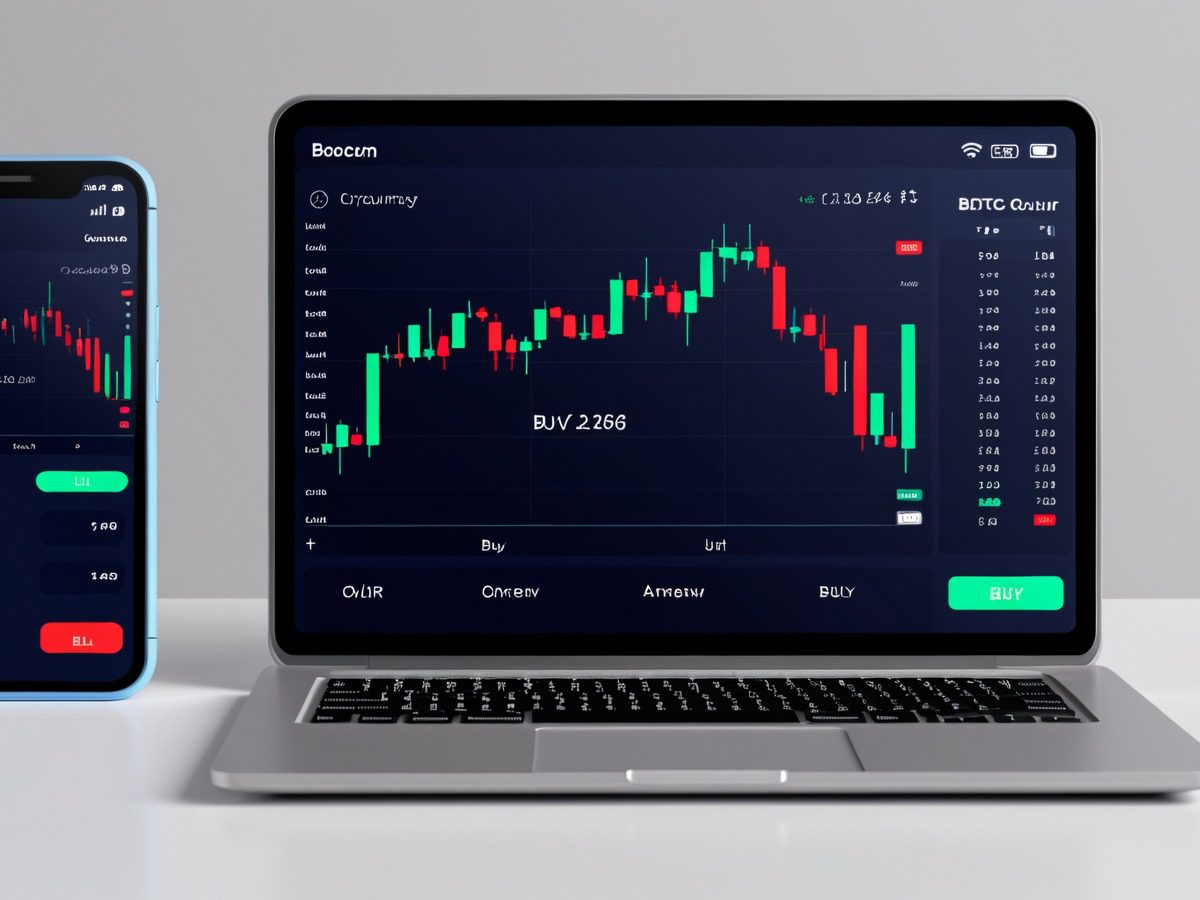
You should choose a cryptocurrency exchange based on its security history, fee structure, and whether it supports your preferred funding methods. These platforms act as a bridge between your bank account and the crypto market.
When comparing options, look for low fees, high security standards, and 24/7 customer support. As NerdWallet explains, exchanges are the most common and accessible method for beginners to acquire digital assets.
| Company | Supported Coins | Trading Fees | Learn More |
|---|---|---|---|
| Coinbase | +250 | $0.99 - 2.00% (Standard), 0.05% - 0.60% (Advanced Trade)
For transactions above $200 (standard account): 1.49% fee for using a bank account or USD wallet, 3.99% fee for using a debit or credit card. For Coinbase Advanced Trade: 0.60% for taker trades and 0.40% for maker trades. The more you trade, the lower the fees - can decrease to as low as 0% - 0.05%. |
Read Review |
| Gemini | +150 | $0.99 - 1.49% (Web & Mobile), 0.20% - 0.40% (Active Trader)
For Gemini’s website or mobile app users are charged 0.50% convenience fee For Active Trader, 0.40% for taker trades and 0.20% for maker trades. The more you trade, the lower the fees - can decrease to as low as 0% - 0.03%. |
Read Review |
| Kraken | +300 | 0.40% - 0.25%
0.40% for taker trades and 0.25% for maker trades. The more you trade, the lower the fees - can decrease to as low as 0% - 0.10%. Using GT tokens to pay trading fees offers a 10% discount |
Read Review |
How Do You Make Your First Bitcoin Purchase?
Making your first purchase requires setting up a verified account and choosing an order type that matches your goals. Once you have selected a platform, the process usually follows these four steps:
- Create and Verify Your Account: You will need to provide personal information and a government-issued ID to comply with “Know Your Customer” (KYC) regulations.
- Fund Your Account: Link your bank account, debit card, or wire transfer funds to the exchange.
- Place an Order: Select Bitcoin (BTC) and enter the dollar amount you wish to spend. You can choose a “market order” to buy immediately or a “limit order” to buy only if the price hits a specific target.
- Execute the Trade: Review the transaction fees and confirm the purchase. Your Bitcoin will then appear in your exchange account.
How Should You Store and Secure Your Bitcoin?
Securing your Bitcoin requires choosing between “hot” software wallets for convenience or “cold” hardware wallets for maximum protection against hackers. If an exchange is hacked or you lose access to your account, your funds could be gone forever.
A Security.org report found that while ownership is rising, many consumers still struggle with digital safety.
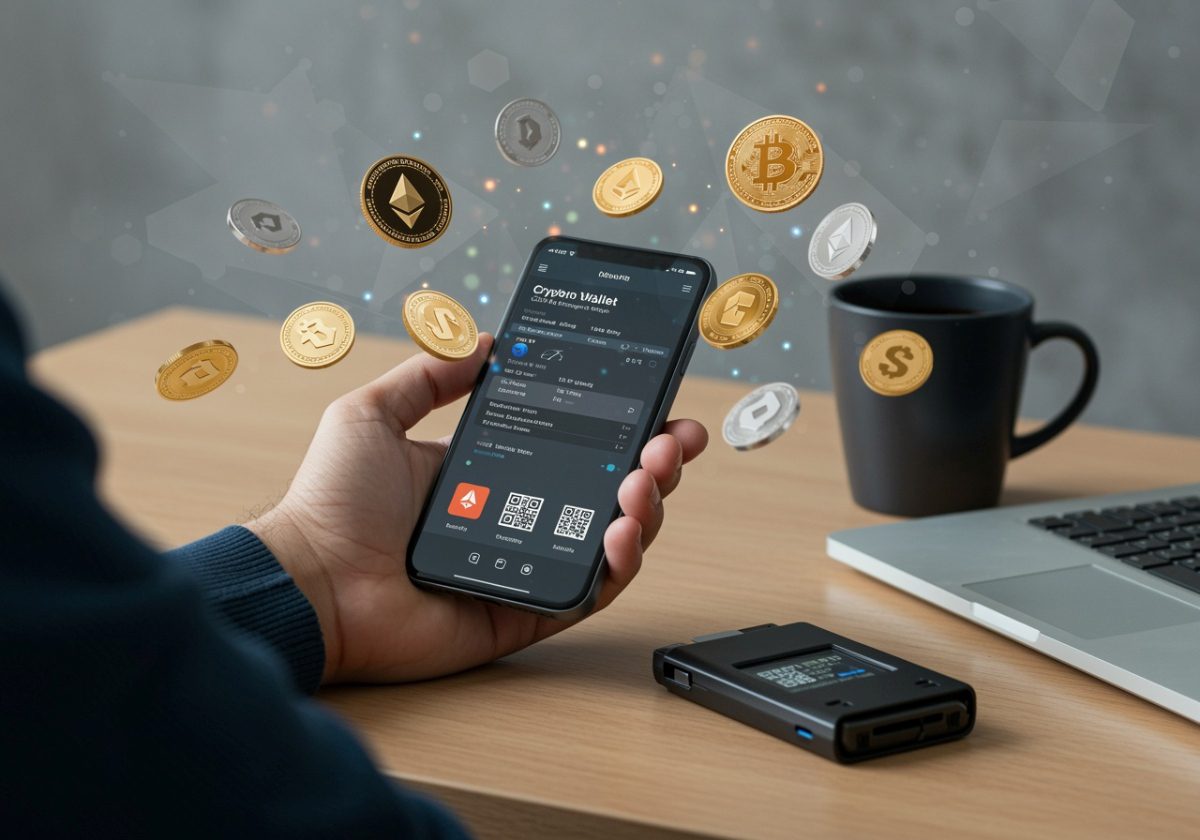
- Hot Wallets: These are software-based wallets connected to the internet. They are convenient for frequent trading but more vulnerable to online threats.
- Cold Wallets: These are physical hardware devices that store your Bitcoin offline. This is the gold standard for security because they cannot be accessed via the internet.
How Do You Manage Risk and Volatility?
Managing Bitcoin volatility is best handled through dollar-cost averaging and maintaining a long-term perspective. Bitcoin is famous for “price swings,” and it is not uncommon for the price to drop 10% or more in a single day.
The mistake most people make is trying to time these swings perfectly. Instead of investing a large sum all at once, you can invest a fixed amount of money at regular intervals.
This lowers the impact of volatility by spreading your entry points across different price levels. Long-term investors often practice “HODLing,” which means holding onto the asset through market ups and downs.
What Are the Tax Implications of Bitcoin Investing?
Bitcoin is taxed as property by the IRS, meaning any sale, trade, or purchase made with the asset triggers a capital gains event. Every time you sell Bitcoin for a profit or trade it for another cryptocurrency, you must report it.
- Short-Term Capital Gains: If you hold Bitcoin for less than a year, profits are taxed at your ordinary income tax rate.
- Long-Term Capital Gains: Holding for more than a year qualifies you for lower rates, typically 0%, 15%, or 20%.
- Losses: If you sell your Bitcoin for less than you paid, you can use those losses to offset other capital gains on your tax return.
The Bottom Line
Investing in Bitcoin has become significantly easier with the arrival of ETFs and user-friendly exchanges, but it remains a high-risk asset. If you are ready to start, consider beginning with a small allocation of 1% to 2% of your total portfolio.
By treating Bitcoin as a diversification tool rather than a get-rich-quick scheme, you can better navigate the volatility of the digital market.