

Table Of Content
For Which Assets You Can Buy/Sell Options?
You can trade options on a wide range of financial assets, allowing you to profit from movements in prices without owning the asset.
Some of the most common assets with active options markets include:
Stocks – For example, buying call options on Tesla (TSLA) allows you to profit if the stock rises without owning shares.
ETFs – Index-tracking ETFs like SPY (S&P 500) and QQQ (Nasdaq-100) have high option liquidity.
Indexes – Instruments like the S&P 500 (SPX) or Nasdaq 100 (NDX) are traded via cash-settled index options.
Commodities – Gold, oil, and agricultural commodities can be traded using futures options or commodity ETFs.
Cryptocurrencies – While not as mainstream, platforms like Deribit and CME offer Bitcoin and Ethereum options.
Each asset type comes with different risk profiles, tax considerations, and strategies.
How to Buy Call and Put Options
Buying options gives traders flexibility to speculate or hedge positions. Call options let you profit from price increases, while puts gain value if prices fall. Here's a step-by-step guide to buying both:
1. Choose the Right Brokerage Platform
To buy options, you first need an options-approved brokerage account. Popular platforms include Interactive Brokers, Charles Schwab, and Robinhood.
Most major brokers require you to apply for access, which involves a questionnaire assessing your experience, income, investment goals, and risk tolerance.
Approval levels vary—from basic single-leg trades (calls or puts) to advanced multi-leg strategies like spreads and straddles.
Broker | Annual Fees | Best For |
|---|---|---|
E-Trade | 0% – 0.35%
0% on stocks and ETFs in self directed brokrage, 0.35% for Core Portfolio Robo Advisor
| Options & Futures Trading |
Interactive Brokers | 0% – 0.75%
$0 online commission on U.S. listed stocks and ETFs, Options: $0.15 – $0.65 per-contract, Futures: $0.25 – $0.85 per-contract. For Interactive Advisors: asset-based management fees of 0.10% to 0.75% | Professional Trading Tools |
Fidelity | 0% – 1.04%
Fidelity Go® Robo advisor: $0: under $25,000, 0.35%/yr: $25,000 and above
Fidelity® Wealth Management dedicated advisor: 0.50%–1.50%
Fidelity Private Wealth Management® advisor-led team: 0.20%–1.04%
| Retirement Account Investing |
Vanguard | Up to 0.30%
$0 online commission on U.S. listed stocks, mutual funds and ETFs, options: $0.65 per-contract, Vanguard Digital Advisor – 0.015%, Vanguard Personal Advisor: 0.03%, Vanguard Personal Advisor Select: up to 0.03%, Vanguard Wealth Management: up to 0.03% | Low-Cost ETF Investors |
J.P. Morgan Self Investing | $0
$0 online commission on U.S. listed stocks and ETFs and $0.65 per-contract | Chase Bank Customers |
Charles Schwab | Up to 0.80%
$0 online commission on U.S. listed stocks, mutual funds and ETFs, options: $0.65 per-contract, Schwab Intelligent Portfolio – 0%, Schwab Intelligent Portfolios Premium – One-time planning fee: $300 + Monthly advisory fee: $30, Schwab Wealth Advisory: up to 0.80% | Advanced Trading Tools |
Merrill Edge | 0.45% – 0.85%
0.45% for Merrill Robo Advisor (Guided Investing), 0.85% for Investing With An Advisor | Bank of America Clients |
Before selecting a broker, consider fees, educational tools, and real-time data access. Some brokers charge per-leg commissions, while others offer commission-free trading.
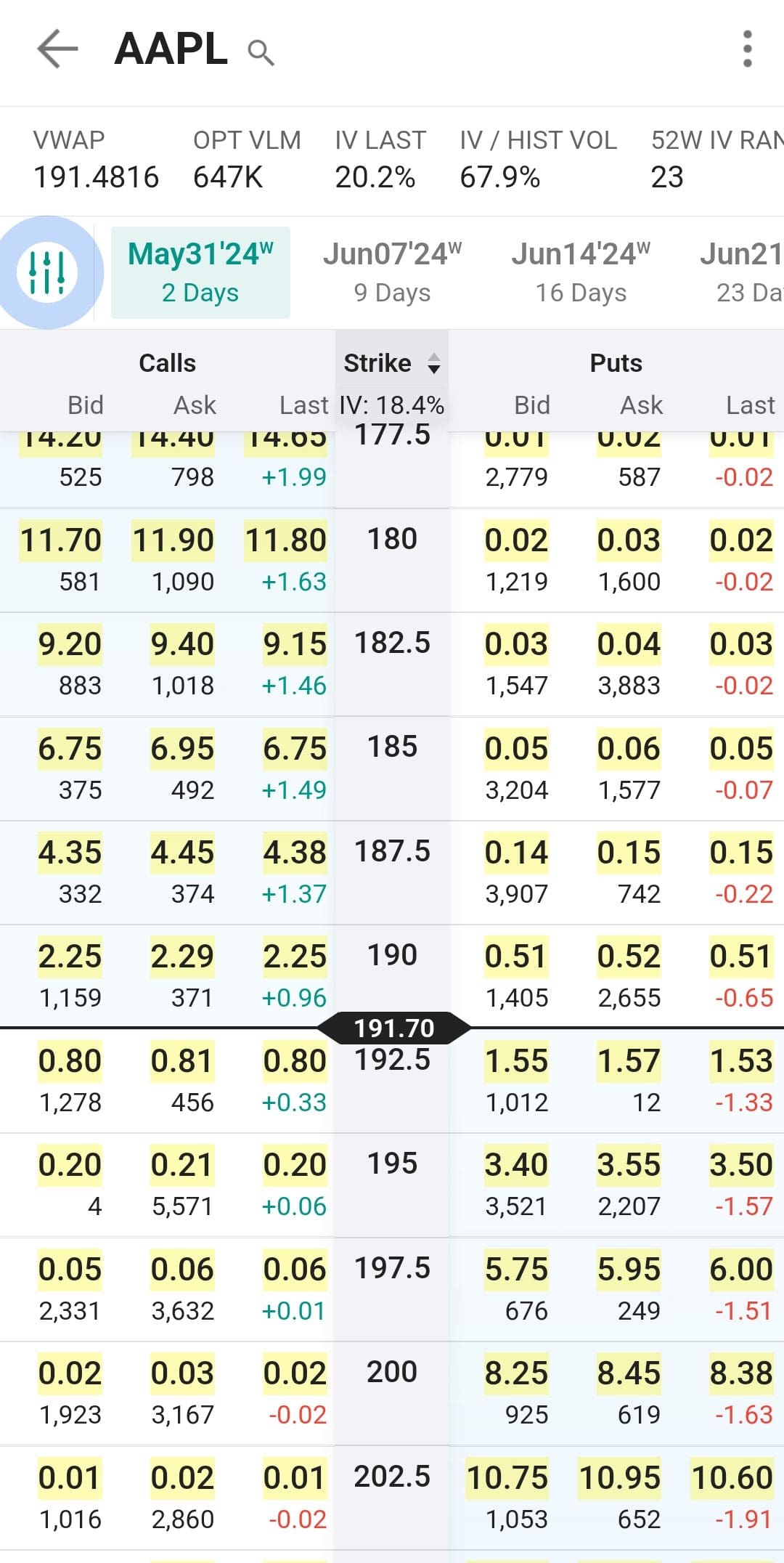
You’ll also want a platform that clearly displays option chains, making choosing strike prices and expirations easier.
- The Smart Investor Tip
Test-drive platforms with a paper trading account before funding with real money. This lets you learn the tools, place mock trades, and avoid costly mistakes while learning.
2. Understand the Strategy: Calls vs. Puts
Options are contracts that give you rights, not obligations.
- A call option lets you buy the underlying asset at a predetermined price (strike price) before the contract expires. You profit if the asset’s price rises above the strike plus the premium you paid.
- A put option lets you sell the asset at the strike price, so it becomes profitable if the asset’s price falls below the strike minus the premium.
Feature | Call Option | Put Option |
|---|---|---|
Right Granted | Buy the underlying asset | Sell the underlying asset |
Used When You Expect | Price to increase | Price to decrease |
Maximum Loss | Premium paid | Premium paid |
Maximum Profit | Unlimited (if price rises) | High (if price drops close to zero) |
Break-even Point | Strike Price + Premium | Strike Price – Premium |
Example Scenario | Buy a $100 call on AAPL for $3. Needs $103+ | Buy a $100 put on TSLA for $4. Needs $96– |
You should also know basic terminology:
Premium – The premium is the price you pay to buy the option contract, which gives you the right to buy or sell the asset.
In-the-money (ITM) – An option is in-the-money when exercising it would be profitable, such as a call with a strike below the current price.
Out-of-the-money (OTM) – An option is out-of-the-money when it has no intrinsic value; for example, a call with a strike price above the current stock price.
Break-even point – The break-even is the stock price at which your option trade neither makes nor loses money, factoring in the premium paid.
3. Select the Strike Price and Expiration Date
Choosing the right strike price and expiration date is just as important as picking the stock itself. The strike determines your profit zone, while the expiration sets your time window.
A closer expiration date makes the option cheaper—but you’ll have less time for the market to move.
For example, you expect stock X, currently at $900, to rise in two weeks. You could buy a $920 call expiring in three weeks for $30. If stock X climbs to $960 before then, the call could be worth $40–$50, depending on volatility.
Longer-dated options (like LEAPS) give the stock more time to move, but they cost more. Use tools like implied volatility and delta to understand how price and time affect your trade.
- The Smart Investor Tip
Use the “open interest” and “volume” filters in the options chain to pick strikes with strong liquidity. This makes it easier to enter and exit trades without wide bid-ask spreads.

4. Place the Trade and Monitor Your Position
Once you’ve picked your option, you’ll enter the trade using your broker’s platform.
Select “Buy to Open,” then choose a limit order to control how much you’re willing to pay for the option. Market orders are fast but risk overpaying, especially during volatile periods.
After placing the trade, monitor it closely. Options are affected by time decay (theta), which accelerates as expiration approaches. Your option can lose value daily—even if the stock doesn’t move—so timing is crucial.
Most platforms let you track your position’s profit/loss, Greeks (like delta and theta), and upcoming earnings or dividends that may affect price.

5. Have an Exit Plan: Know When to Take Profits or Cut Losses
Options are time-sensitive. Unlike stocks, you can’t just “hold and wait.” Therefore, you must define your exit plan from the start—whether you're looking for a specific return or setting a maximum loss.
Many traders choose to take profits when the option reaches 50–100% gains to avoid giving back gains to volatility. Others cut losses early if the trade isn’t working, especially if there’s little time left until expiration.
Alternatively, if the stock doesn't move as expected and your option drops to $0.50, you may decide to cut your loss instead of letting it decay to zero.
- The Smart Investor Tip
Use the 50/30/20 rule: close 50% of your contracts at your target profit, keep 30% running with a stop, and reserve 20% as a high-risk/high-reward play—ideal for managing emotion.
Things to Consider Before Buying Options
Options can offer strategic advantages, but they require careful planning. Before jumping in, it's important to evaluate several key factors that impact success.
Time decay can work against you – Options lose value as expiration nears, especially if the stock doesn’t move. For example, a call on Amazon might drop in value even if the stock holds steady, simply because time is passing.
Volatility drives pricing – Higher implied volatility (IV) makes options more expensive. If you're buying during peak volatility, like right before earnings, the option premium may drop even if the stock moves in your favor.
Know your break-even point – Your stock needs to move beyond the strike price plus the premium paid. For instance, if you buy a $100 call for $3, the stock must rise above $103 just to break even.
Liquidity affects execution – Low-volume options can have wide bid-ask spreads, leading to slippage. A $2.00 ask and $1.50 bid could cost you 25% instantly if you buy at market.
Evaluating these elements can help you better time your trades and avoid overpaying.
Avoid Common Mistakes When Buying Options
Many traders lose money on options not because of market direction, but due to poor planning. Avoiding common errors can improve your outcomes.
Buying too far out-of-the-money – These options are cheap, but also unlikely to hit. A $150 call on a $130 stock might never get there before expiration.
Holding through expiration without a plan – Some traders hold hoping for a miracle. As a result, time decay can eat the premium completely. Instead, set exit rules early.
Ignoring earnings and events – Key events like earnings or Fed meetings can spike or drop volatility. For example, buying before earnings and holding after often leads to an IV crush.
Overtrading without understanding Greeks – Delta, theta, and vega affect how your option behaves. Not knowing how they work can lead to unexpected losses—even when your stock moves correctly.
Understanding how options work and when to use them helps avoid costly errors that many beginners make.
FAQ
You can start with just the cost of a single option contract, which is typically 100 times the premium. Some brokers may also require a minimum deposit or approval level.
No, buying options doesn’t require owning the underlying stock. You’re only purchasing the right to buy or sell the stock, not the stock itself.
If the option is in-the-money, it may be automatically exercised or settled in cash. If it’s out-of-the-money, it expires worthless and you lose the premium.
Yes, most traders sell their options before expiration to lock in profits or limit losses. This avoids automatic exercise or losing time value.
Higher implied volatility increases premiums because it signals greater expected movement. Even if the stock moves in your favor, a drop in volatility can reduce your option’s value.
American options can be exercised at any time before expiration. European options can only be exercised at expiration, though both can typically be sold at any time.
Most penny stocks don’t have options due to low volume and high risk. Options are usually available only on more liquid, widely traded stocks.
LEAPS are long-term options with expirations longer than 12 months. They're often used for long-term strategies with less time decay than short-term contracts.
If you're just buying options (calls or puts), your maximum loss is the premium. However, writing or selling options can expose you to unlimited risk.
Yes, some brokers allow limited options trading in IRAs, such as buying calls or puts. Advanced strategies like short selling options are usually restricted.
Earnings create volatility spikes that inflate option prices. After earnings, implied volatility often crashes, reducing the value of options even if the stock moves.
The Greeks measure how different factors affect your option’s price. For example, delta shows price sensitivity, while theta shows how much value you lose daily.
Options offer flexibility and defined risk, but they can also expire worthless. They’re not inherently safer or riskier—it depends on how you use them.