The best way to invest money is to build a low-cost, diversified portfolio that aligns with your specific goals and timeline.
In practice, this means prioritizing an emergency fund, maximizing tax-advantaged accounts like 401(k)s or IRAs, and choosing broad index funds rather than trying to pick individual stocks.
This guide breaks down how to choose the right approach, compares short-term versus long-term options, explains risk, and highlights common mistakes to avoid.
Key Takeaways
- Start with your “why”: Goals and timeline determine whether you should prioritize safety (short-term) or growth (long-term).
- Risk is unavoidable, but manageable: Diversification and asset allocation are the main tools for balancing risk and reward.
- Tax-advantaged accounts matter: 401(k)s and IRAs can meaningfully improve after-tax results versus investing in a regular brokerage account.
- You don’t need a lot to begin: Many brokerages and retirement plans let you start with small, recurring contributions.
- Simple often beats complex: For most people, low-cost index funds and ETFs plus consistency can outperform frequent trading over time.
What should you do before investing: set goals, risk tolerance, and a starting plan?
You should define your specific goal, your time horizon, and your risk tolerance before you put a single dollar into the market.
The mistake most people make is picking an asset or a “hot” stock before they know when they actually need the money back.
A practical starting checklist:
- 1. Build a cash buffer first: If an unexpected expense would force you to sell investments, prioritize an emergency fund in a safe, liquid account like a high-yield savings account.
- 2. Match money to the timeline: If you need the funds in the next 1-3 years, you generally want stability. If the goal is 10+ years away, you can usually take more risk in pursuit of growth.
- 3. Choose an approach you can maintain: The “best” strategy is the one you can follow through market ups and downs without panic-selling.

If you feel overwhelmed, it helps to remember that “best investments” depend on your situation.
A Bankrate overview of best investments makes this point clearly by covering options from very safe to higher risk.
How much money do you need to start investing?
You can start investing with as little as $1 to $5 thanks to fractional shares and zero-minimum brokerage accounts.
What actually matters here is the habit of consistency rather than the size of your first deposit.
Many online brokers for beginners support small, automated deposits that work with any budget. Focus on these three pillars:
- Consistency: Regular contributions can matter as much as picking the “perfect” investment.
- Fees and friction: Avoid strategies that rely on frequent trading or high costs.
- Staying invested: A solid plan that you stick with is usually better than a complicated plan you abandon.
If you are starting with a small amount, consider focusing on broad diversification (like a total-market index fund or ETF) rather than trying to pick a handful of winners.
| Broker | Minimum Investment | Commission/Fees | Learn More |
|---|---|---|---|
| Fidelity Investments | $0 - $2M
No minimum for Fidelity Go® and brokerage, $500,000 for Fidelity® Wealth Management, $2 million for Fidelity Private Wealth Management®
|
0% - 1.04%
Fidelity Go® Robo advisor: $0: under $25,000, 0.35%/yr: $25,000 and above
Fidelity® Wealth Management dedicated advisor: 0.50%–1.50%
Fidelity Private Wealth Management® advisor-led team: 0.20%–1.04%
|
Read Review |
| Charles Schwab | $0 - $500,000
$0 for brokerage account, $5,000 for Schwab Intelligent Portfolios, $25,000 for Schwab Intelligent Portfolios Premium, $500,000 for Schwab Wealth Advisory |
Up to 0.80%
$0 online commission on U.S. listed stocks, mutual funds and ETFs, options: $0.65 per-contract, Schwab Intelligent Portfolio - 0%, Schwab Intelligent Portfolios Premium - One-time planning fee: $300 + Monthly advisory fee: $30, Schwab Wealth Advisory: up to 0.80% |
Read Review |
| Robinhood | $0 | $0 - $6.99
$0 for basic account, $6.99 for Robinhood Gold |
Read Review |
Which investments work best for short-term money you might need soon?
High-yield savings accounts, money market funds, and short-term CDs are the most reliable options for money you need within the next three years.
The trade-off is that these offer lower returns in exchange for the guarantee that your principal remains stable.
Common short-term choices include:
- High-yield savings accounts: Good for emergency funds and near-term goals, with easy access.
- Certificates of deposit (CDs): Typically offer a fixed rate for a fixed term, but your money is less accessible without penalties.
- Money market accounts or money market funds: Often used for cash management, though details and protections differ by product type.
If safety is your priority, it’s also worth understanding deposit insurance.
According to FDIC deposit insurance guidelines, eligible bank deposits are insured up to applicable limits, which can reduce the risk of losing insured cash if a bank fails.
What are the best long-term strategies for building wealth?
Low-cost stock index funds and ETFs are the most effective long-term strategies for building wealth because they capture broad market growth while keeping fees low.
In practice, sticking to a simple “three-fund portfolio” often outperforms complex trading strategies over decades.
Common long-term building blocks include:
- Stock index funds and ETFs: Broad exposure to U.S. or global markets, typically by investing in index funds at low cost.
- Bond funds: Can help reduce volatility and provide income, especially as you get closer to your goal.
- Target-date funds: A “set-it-and-tilt” option that automatically becomes more conservative over time.
A key reality: long-term investing is less about predicting the next hot theme and more about having a portfolio you can hold.
That said, professional outlooks can highlight areas investors are watching. For example, BlackRock’s 2026 investing outlook discusses themes like quality fixed income and equity opportunities tied to AI.
| Research Platform | Subscription Type | Pricing | Learn More |
|---|---|---|---|
| Morningstar Investor | $20.75
Price is based on annual billing. Monthly subscription rates are higher. |
$249 ($20.75 / month) | Read Review |
| Seeking Alpha | Basic Plan | $24.90 - $200
Price is based on annual billing. Monthly subscription rates are higher. |
Read Review |
| Zacks Premium | Premium | $249 ($20.75/month)
No monthly plan |
Read Review |
How do you balance low-risk vs. high-risk investments without guessing the market?
The most effective way to balance risk is to use your time horizon as a guide: the longer you have until you need the money, the more risk you can afford to take.
What actually matters here is having enough low-risk cash on hand so you aren't forced to sell your high-risk stocks during a market dip.
A practical way to find your balance:
- Use time as a risk manager: The longer your horizon, the more room you may have for stock-heavy allocations while asking should I invest in bonds to balance potential volatility.
- Right-size the risky portion: If market drops would cause you to sell in panic, you are likely taking too much risk.
- Avoid false safety: Some investments can look stable until they are not (for example, concentrated bets, leverage, or products you do not understand).
One clue about what other investors are doing: State Street Global Advisors notes that retail investors account for a meaningful share of U.S. trading volume.
See the figures in State Street Global Advisors’ investor recap. That does not tell you what you should do, but it reinforces why having a personal plan matters more than following the crowd.
What is asset allocation and diversification, and why do they matter so much?
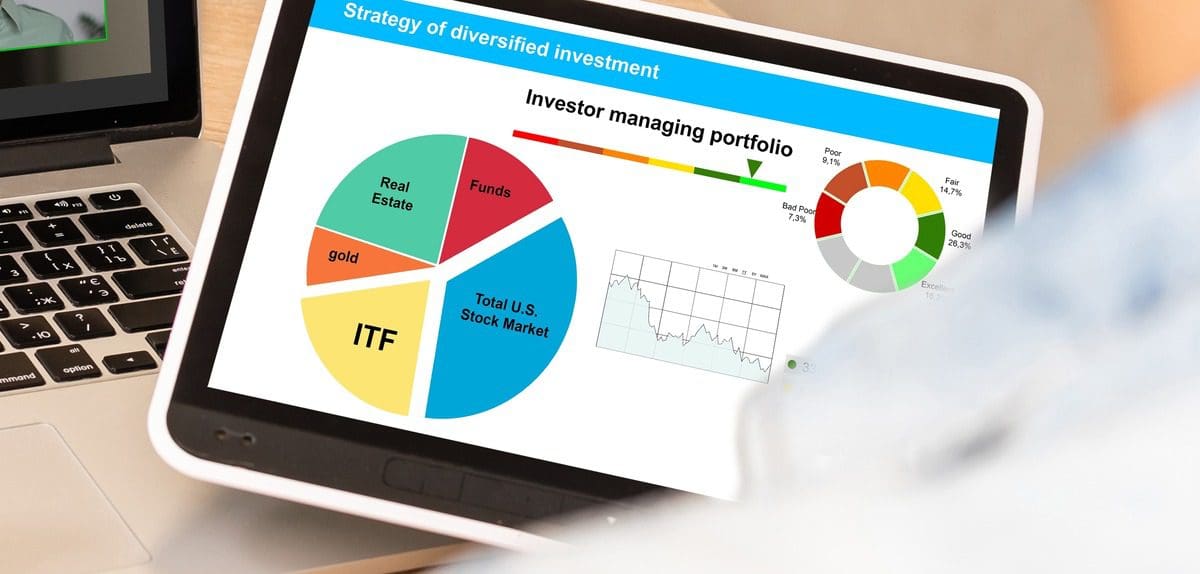
Asset allocation is the mix of broad categories like stocks and bonds in your portfolio, while diversification is spreading your bets within those categories to avoid losing everything on one bad company.
These are your primary tools for managing risk because they ensure no single market event can wipe out your entire savings.
Why they matter:
- They reduce single-point failure risk: A diversified portfolio is less dependent on one company, sector, or asset type.
- They help you stay invested: Smoother performance can make it easier to hold on during downturns.
- They are controllable: You cannot control markets, but you can control your mix, costs, and rebalancing discipline.
A simple implementation many consumers use is a core of broad index funds (U.S. stocks, international stocks, and bonds) and occasional rebalancing back to target percentages.
Is passive investing or active investing better for most people?
Passive investing is better for most people because it is significantly cheaper and historically more reliable than trying to beat the market through active stock picking.
The trade-off is that you will never “beat” the market, but you are also much less likely to significantly underperform it.
For many everyday investors, passive strategies can be easier to sustain because they tend to be:
- Lower cost: Fees matter, especially over long periods.
- Less time-intensive: You do not need to constantly monitor positions.
- More consistent: You are not reliant on being “right” repeatedly.
Active investing can still play a role if you enjoy it and keep it limited, but it becomes riskier when it replaces a diversified core or encourages frequent trading.
How can IRAs and 401(k)s improve your results through tax advantages?
IRAs and 401(k)s improve your results by shielding your gains from taxes, allowing your money to compound much faster than it would in a standard brokerage account.
In practice, the “free money” from an employer match in a 401(k) is the single best return on investment most people will ever find.
Common account types:
- 401(k) and workplace plans: Often allow automatic paycheck contributions and employer matching.
- Traditional IRA/401(k): Contributions may be tax-deductible, with taxes due later on withdrawals.
- Roth IRA/Roth 401(k): Contributions are made with after-tax dollars, and qualified withdrawals from a Roth IRA can be tax-free.

If you are deciding where to put the next dollar, consider your employer match first.
Then, compare your current tax bracket against what you expect in the future to choose between Traditional and Roth options.
What common investing mistakes should you avoid?
The most damaging mistakes are trying to time the market, paying high management fees, and letting emotions dictate when you buy or sell.
The mistake most people make is reacting to daily financial news rather than sticking to a pre-determined plan.
Mistakes to watch for:
- Trying to time the market: Jumping in and out can lock in losses and miss rebounds.
- Concentrating too much in one bet: A few stocks or one “hot” asset can dominate outcomes.
- Ignoring fees and taxes: High costs can quietly erode returns year after year.
- Chasing performance: Buying what just went up often leads to buying high and selling low.
- Not having a plan for cash needs: Investing money you need soon may force you to sell at a bad time.
If you want a simple guardrail, write down your goal, timeline, and target allocation.
Review it once or twice a year rather than reacting to headlines.
The Bottom Line
The “best” way to invest money is the approach you can stick with: clear goals, a realistic risk level, and broad diversification.
Start with short-term cash needs, then build a long-term portfolio using tax-advantaged accounts like IRAs or 401(k)s.
If you take one action today, make it setting a basic plan you can automate and revisit periodically.