

Cryptocurrency is no longer just a niche internet concept. It is now a mainstream topic in global finance, and U.S. consumers increasingly encounter it through investing apps, payment discussions, and news coverage.
At a basic level, cryptocurrency is a digital or virtual currency secured by cryptography and run on decentralized networks, most often using blockchain technology. Unlike traditional money issued by governments, it is not controlled by a single central authority, which changes how transactions are processed and what consumer protections may apply.
This guide breaks down what cryptocurrency is, how it works, potential benefits, key risks, common types, and the main ways people buy and store it.
Key Takeaways
- Cryptocurrency is a digital currency secured by cryptography and operates on decentralized networks like blockchain.
- Blockchain technology provides transparency and immutability for transactions, acting as a public ledger.
- Potential benefits include faster transactions and decentralization, but significant risks like volatility, scams, and regulatory uncertainty exist.
- Bitcoin and Ethereum are the two largest cryptocurrencies, with thousands of “altcoins” offering various functionalities.
- Buying cryptocurrency involves using online exchanges, and secure storage in digital “wallets” is crucial.
- While legal in many places, cryptocurrency is largely unregulated, and consumer protections often do not apply.
What Exactly is Cryptocurrency?
At its core, cryptocurrency is a form of digital money. It exists entirely online and uses encryption, known as cryptography, to help secure transactions and verify transfers.
One of its defining features is decentralization. That means no single bank, government, or central authority issues it or controls the network.
Instead, the system is spread across many computers worldwide that work together to verify and record activity.
How Does Cryptocurrency Actually Work?
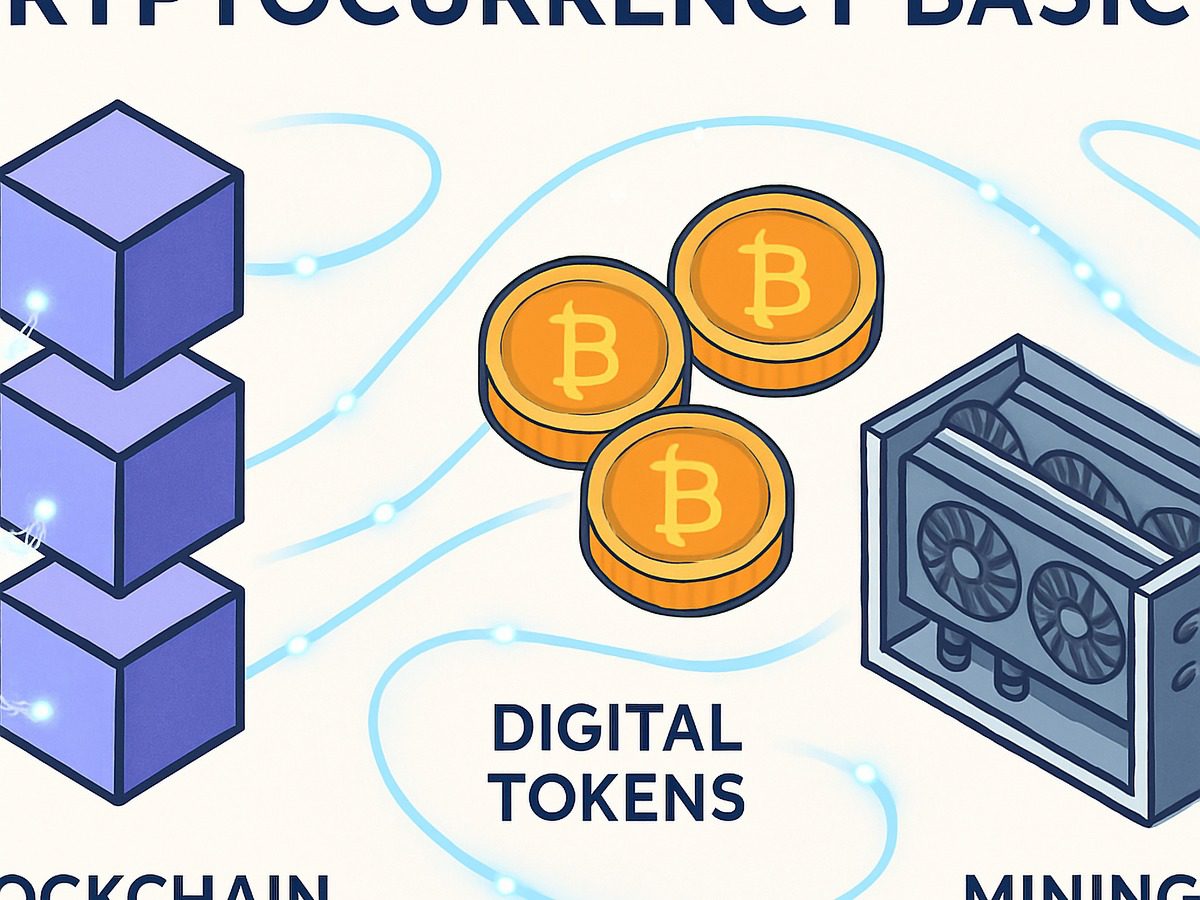
Most cryptocurrencies run on blockchain technology. You can think of a blockchain as a digital record book that is shared across a network and updated over time.
Each “block” contains a set of transactions. When a block is completed, it is linked to the previous block using cryptography, creating a chronological “chain” of records.
Because the ledger is distributed across many computers, changing past records is extremely difficult. The network must validate new transactions before they are added, which helps maintain integrity without relying on a traditional intermediary like a bank.
What Are the Potential Benefits of Cryptocurrency?
Supporters point to several potential advantages. Decentralized networks can allow transactions to settle more quickly and sometimes at lower cost, especially for cross-border transfers that would otherwise pass through multiple financial institutions.
Blockchain’s public recordkeeping can also increase transparency, although privacy differs widely depending on the cryptocurrency and how it is used.
Some people also view certain cryptocurrencies as a way to diversify how they store value. That said, whether it functions as an effective hedge in practice is debated, and outcomes can vary significantly over time.
What Are the Risks of Investing in Crypto?
Cryptocurrency investing comes with significant risks, particularly for beginners.
Volatility is one of the biggest issues. Prices can move sharply in either direction over short periods, which can lead to large gains or steep losses.
Regulation is another uncertainty. Rules continue to develop across countries and within the U.S., and that can affect how crypto products are offered, traded, or taxed.
Security risks also matter. While blockchains are designed to be resilient, exchanges and individual accounts can still be vulnerable to hacking, theft, or scams.
If you lose access to your private keys, the assets may be permanently unrecoverable.
It is also important to understand protections. Traditional safeguards, such as those offered by the FDIC for bank deposits, generally do not apply to crypto assets.
Which Cryptocurrencies Are Most Popular?
- Bitcoin (BTC): The first and largest cryptocurrency, often described as “digital gold” by supporters. It launched in 2009.
- Ethereum (ETH): The second-largest cryptocurrency. Ethereum is known for “smart contracts,” which are programs that can execute automatically when conditions are met. This capability helped drive areas like decentralized finance (DeFi) and non-fungible tokens (NFTs).
- Altcoins: A broad category for cryptocurrencies other than Bitcoin. Some are established projects such as Ripple (XRP) and Cardano (ADA), while many others are smaller and can be highly speculative. These projects often claim to offer different features or solve different problems, but the quality and risk level vary widely.
How Do You Buy Cryptocurrency?
Most people buy cryptocurrency through a centralized cryptocurrency exchange. These platforms let you buy, sell, and trade digital assets using traditional money, including U.S. dollars.
The process typically involves:
- Choosing an Exchange: Compare platforms based on security practices, available assets, and usability.
- Creating an Account: Most exchanges require identity verification through a “Know Your Customer” (KYC) process.
- Funding Your Account: You can usually connect a bank account, debit card, or another payment method to deposit funds.
- Placing an Order: After funding your account, you select an asset and place a buy order.

Fees can differ significantly between exchanges and based on the type of transaction, so it helps to review the fee schedule before trading.
Popular Cryptocurrency Exchanges Comparison
To help you evaluate your options, the following table compares some of the most widely used exchanges based on their asset variety and trading fees.
| Exchange | Supported Coins | Spot Trading Fees (Standard/Advanced) |
|---|---|---|
| Coinbase | 250+ | 0.05% – 2.00% |
| Kraken | 300+ | 0.10% – 0.40% |
| Gemini | 150+ | 0.20% – 1.49% |
| Crypto.com | 350+ | 0.075% |
Storing Your Crypto: Wallets and Security
Once you buy cryptocurrency, you need a way to store it securely. A crypto “wallet” does not store coins in a physical sense.
Instead, it stores the private keys that prove ownership and allow you to authorize transactions.
- Hot Wallets: Internet-connected wallets, including exchange wallets and many mobile apps. They are convenient for frequent transactions, but online access can increase exposure to certain security threats.
- Cold Wallets: Offline storage methods, such as hardware devices or paper wallets. They reduce online risk, but require careful handling to avoid physical loss or damage.

Whichever type you use, basic security steps matter. Use strong, unique passwords, enable two-factor authentication (2FA) when available, and keep recovery phrases (seed phrases) stored safely offline.
Is Cryptocurrency Legal and Regulated?
Rules vary widely around the world. In the U.S., cryptocurrency is generally legal, and the IRS often treats it as property for tax purposes.
At the same time, regulation is still developing and can differ by agency and by state. Some cryptocurrencies may be treated as securities by the Securities and Exchange Commission (SEC), while others may be considered commodities by the Commodity Futures Trading Commission (CFTC).
Because this framework continues to evolve, the regulatory status, available products, and consumer protections can change. As Bankrate explains, understanding the legal environment is an important part of participating in the market.
Future of Cryptocurrency and Digital Finance
Cryptocurrency continues to evolve, with ongoing experimentation across financial services and digital ownership. DeFi aims to recreate parts of traditional finance on blockchain networks without standard intermediaries.
NFTs have introduced new ways to represent ownership of unique digital items. Governments are also exploring central bank digital currencies (CBDCs), which could combine aspects of traditional currency systems with digital infrastructure.
At the same time, questions about regulation, scalability, and mainstream adoption remain open. Different stakeholders have different views on how quickly crypto will integrate into everyday finance.
The Bottom Line
Cryptocurrency introduces new ways to move and store value, but it also brings meaningful trade-offs for consumers, especially around volatility, security, and limited protections compared with traditional financial accounts.
Understanding how exchanges, wallets, and regulation work can help you evaluate the space more clearly, whether you are simply learning or deciding how to engage with it.
