

You can get free cryptocurrency by participating in learn-and-earn programs, staking assets you already own, or using crypto-reward credit cards for daily purchases. While these rewards often require an exchange of your time or data, they allow you to build a portfolio without a direct cash investment.
In 2024, these methods have become standard tools for both new and experienced investors looking to accumulate digital assets.
While “free” often sounds too good to be true, these rewards are typically an exchange for your time, your data, or the use of your existing capital. This guide covers the most reliable ways to earn cryptocurrency and the security risks you must navigate to protect your wallet.
Key Takeaways
- Active earning: Learn-and-earn programs and blockchain games offer small amounts of crypto for your time and engagement.
- Passive income: Staking and lending allow you to earn yield on assets you already own.
- Spending rewards: Crypto credit cards and browser extensions provide “cash back” in the form of digital currency.
- Tax obligations: Almost all free cryptocurrency rewards are considered taxable income by the IRS.
What Are the Best Ways to Get Free Crypto?
The best ways to get free crypto are through exchange-based educational modules, staking rewards, and cash-back credit cards that pay out in digital assets. Most legitimate methods involve either active tasks like taking quizzes or passive income from holding specific coins.
These options are generally safer when accessed through established exchanges and financial platforms.
| Exchange | Supported Coins | Trading Fees | Learn More |
|---|---|---|---|
| Coinbase | +250 | $0.99 - 2.00% (Standard), 0.05% - 0.60% (Advanced Trade)
For transactions above $200 (standard account): 1.49% fee for using a bank account or USD wallet, 3.99% fee for using a debit or credit card. For Coinbase Advanced Trade: 0.60% for taker trades and 0.40% for maker trades. The more you trade, the lower the fees - can decrease to as low as 0% - 0.05%. |
Read Review |
| Kraken | +300 | 0.40% - 0.25%
0.40% for taker trades and 0.25% for maker trades. The more you trade, the lower the fees - can decrease to as low as 0% - 0.10%. Using GT tokens to pay trading fees offers a 10% discount |
Read Review |
| Gemini | +150 | $0.99 - 1.49% (Web & Mobile), 0.20% - 0.40% (Active Trader)
For Gemini’s website or mobile app users are charged 0.50% convenience fee For Active Trader, 0.40% for taker trades and 0.20% for maker trades. The more you trade, the lower the fees - can decrease to as low as 0% - 0.03%. |
Read Review |
| Crypto.com | +350 | 0.075%
For both maker and taker orders. The more you trade, the lower the fees - can decrease to as low as 0% - 0.050%. Holding and staking CRO tokens, Crypto.com native token, unlocks additional fee discounts. |
Read Review |
Because the market is highly regulated, these companies use “free” crypto as a marketing tool to attract new users. This creates a win-win scenario where you receive assets while the platform gains engagement.
What actually matters here is choosing reputable providers to ensure your earned rewards are actually distributed to your wallet.
How Can You Earn Crypto with Learn-and-Earn Programs?
You can earn crypto by watching short educational videos and passing knowledge quizzes on major exchanges like Coinbase or Revolut. These platforms reward you with small amounts of the specific token you just learned about, often ranging from $3 to $10 per course.
It is an excellent, low-risk way for beginners to educate themselves about new blockchain projects.
Upon successful completion, the platform deposits the tokens directly into your account. While the dollar value is often modest, it allows you to build a diversified portfolio of small-cap tokens without spending your own money.
The courses are usually brief and can be completed in just a few minutes.
What Are Crypto Airdrops and How Do You Qualify?
You qualify for airdrops by holding specific coins in a private wallet or interacting with a new blockchain project's test network before its official launch. Developers use these distributions to encourage adoption and decentralize the token's ownership among early users.
In practice, finding legitimate airdrops requires following reputable project developers on social media or using dedicated tracking websites.
Be cautious, as airdrops are a common vector for scams. Never share your private keys or “seed phrase” just to claim a token.
Many experienced users use a secondary “burner” wallet for these interactions to keep their main holdings secure from potentially malicious contracts.
How Does Passive Income Work via Staking and Lending?
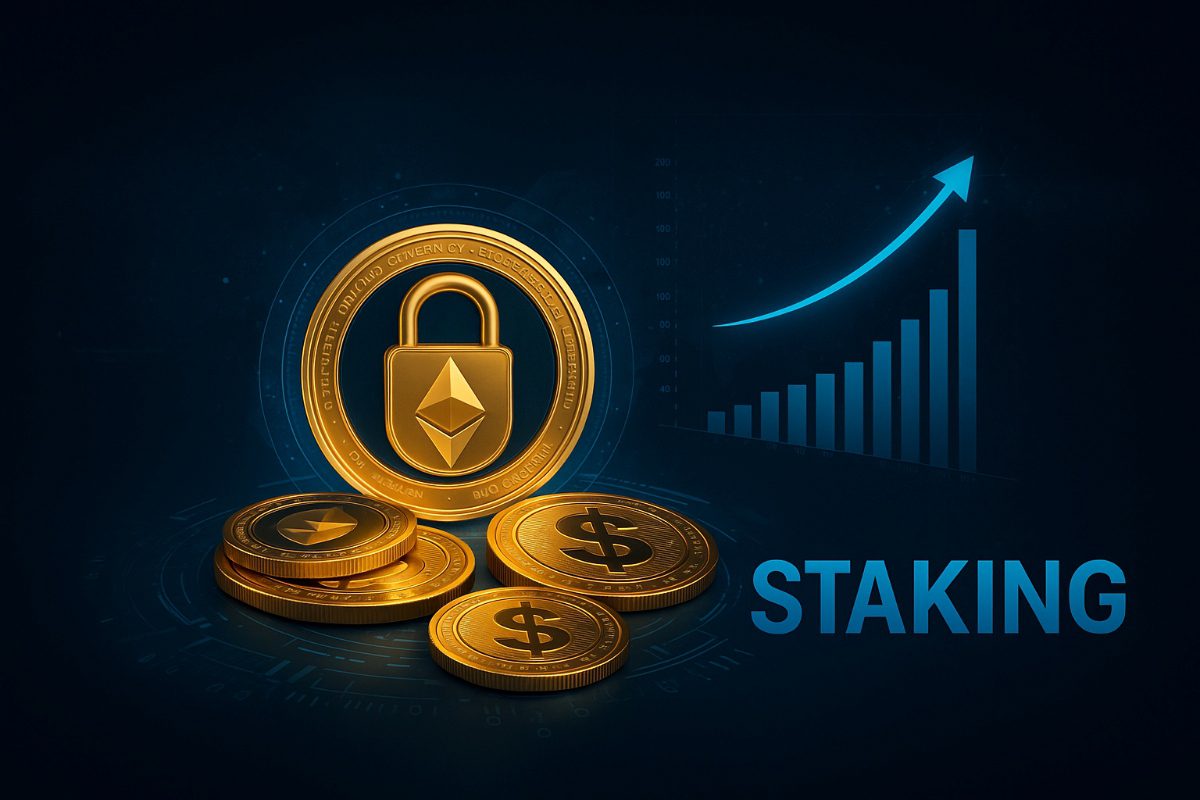
Staking and lending allow you to earn yield on your existing digital assets by locking them up to support network security or providing liquidity to borrowers. As Money.com explains, staking transforms your digital assets into passive income generators.
This process helps secure the network and facilitate transaction processing, for which participants receive rewards.
Beyond staking, you can also explore lending. As Mintos explains, crypto lending involves depositing your assets into a platform that lends them to others.
This allows you to earn interest on the borrowed amount, similar to a traditional savings account. The trade-off is that lending often involves more platform risk than native staking.
Can You Get Free Crypto Using Credit Card Rewards?
You can earn Bitcoin or other tokens by using a crypto rewards credit card that offers 1% to 3% back on every purchase you make. These cards function exactly like traditional cash-back cards, but the rewards are automatically converted into digital assets.
This is one of the most consistent ways to “stack sats,” or accumulate small fractions of Bitcoin, over the long term.
The benefit of this method is that it requires no change in your daily habits. You simply use the card for your regular expenses, and the rewards are deposited into your linked exchange account.
Most of these cards are issued by major exchanges, providing a seamless bridge between your daily spending and your investment portfolio.
Are Play-to-Earn Blockchain Games Still Worth It?
Play-to-Earn (P2E) games are worth it if you enjoy the gameplay, but they rarely provide a substantial income for the average user without a significant time commitment. Players earn tokens or Non-Fungible Tokens (NFTs) by completing in-game tasks or winning competitions.
While some games require an upfront investment, many now offer “free-to-play” tiers.
In 2024, these games have moved beyond simple clicking tasks to more immersive experiences. However, the value of in-game tokens can be highly volatile.
The mistake most people make is treating these games as a primary income source rather than a hobby with occasional rewards.
What Are the Tax Implications of Free Crypto?
The IRS treats free cryptocurrency rewards as ordinary income, meaning you must report their fair market value at the time you receive them. Whether you earn through staking, airdrops, or quizzes, the dollar value counts toward your total taxable income for the year.
This applies even if you do not sell the tokens immediately.
Key tax rules include:
- Income valuation: You must report the fair market value of the crypto in U.S. dollars at the time you receive it.
- Capital gains: If the crypto increases in value after you receive it and you later sell it, you will also owe capital gains tax on that appreciation.
- Record keeping: You are responsible for maintaining your own records, especially for airdrops and DeFi rewards that may not generate 1099 forms.
How Can You Avoid Free Crypto Scams?
You can avoid scams by never sharing your private recovery phrase and ignoring any “giveaway” that requires you to send crypto first to verify your address. Scammers often create “lookalike” accounts that are nearly identical to famous crypto influencers or companies.
If a deal seems too good to be true, it almost certainly is.
Follow these fundamental safety rules:
- Never share keys: No legitimate giveaway will ever ask for your private keys or your 12-to-24-word recovery phrase.
- Verify the source: Use official websites and verified social media accounts to confirm any promotion.
- Avoid “Send-to-Receive”: Any platform asking for an initial “verification” payment is a fraud.
- Use a burner wallet: For new or unverified airdrops, use a secondary wallet that does not contain your primary holdings.
The Bottom Line
Earning free cryptocurrency is a legitimate way to build a portfolio, provided you are willing to put in the time or utilize your existing assets. Whether you choose the passive route of staking or the active participation of learn-and-earn programs, always prioritize security.
Start with well-known, regulated platforms to minimize your risk while you explore the digital asset ecosystem.
Read More
