Scaling a crypto exchange comes down to three things, keeping your matching engine fast under heavy load, building real liquidity, and meeting regulatory requirements in every market you touch. Do those well and you can grow without blowing up user trust during the exact moments that matter most, like volatility spikes.
As of early 2026, the global cryptocurrency exchange market is valued at approximately $48.41 billion, with projections suggesting it could reach $122.63 billion by 2032. What actually matters here is whether your platform can stay stable, liquid, and compliant as that demand ramps up.
Key Takeaways
- Technical Performance: A high-performance matching engine is the most critical factor for retaining high-volume traders.
- Market Growth: While Asia Pacific holds the largest market share, North America is currently the fastest-growing region for crypto exchange platforms.
- Liquidity Management: Scaling requires deep order books across multiple global markets to prevent price slippage.
- Compliance: Navigating international regulations is essential for long-term sustainability and user trust.
What Makes a Matching Engine Scalable?
A matching engine is scalable when it can keep latency low and throughput high as order volume spikes. For an exchange to scale, this engine must provide ultra-low latency and high throughput.
As AWS technical insights suggest, minimizing “tick-to-trade” latency is vital for ensuring fair and efficient access for all market participants.
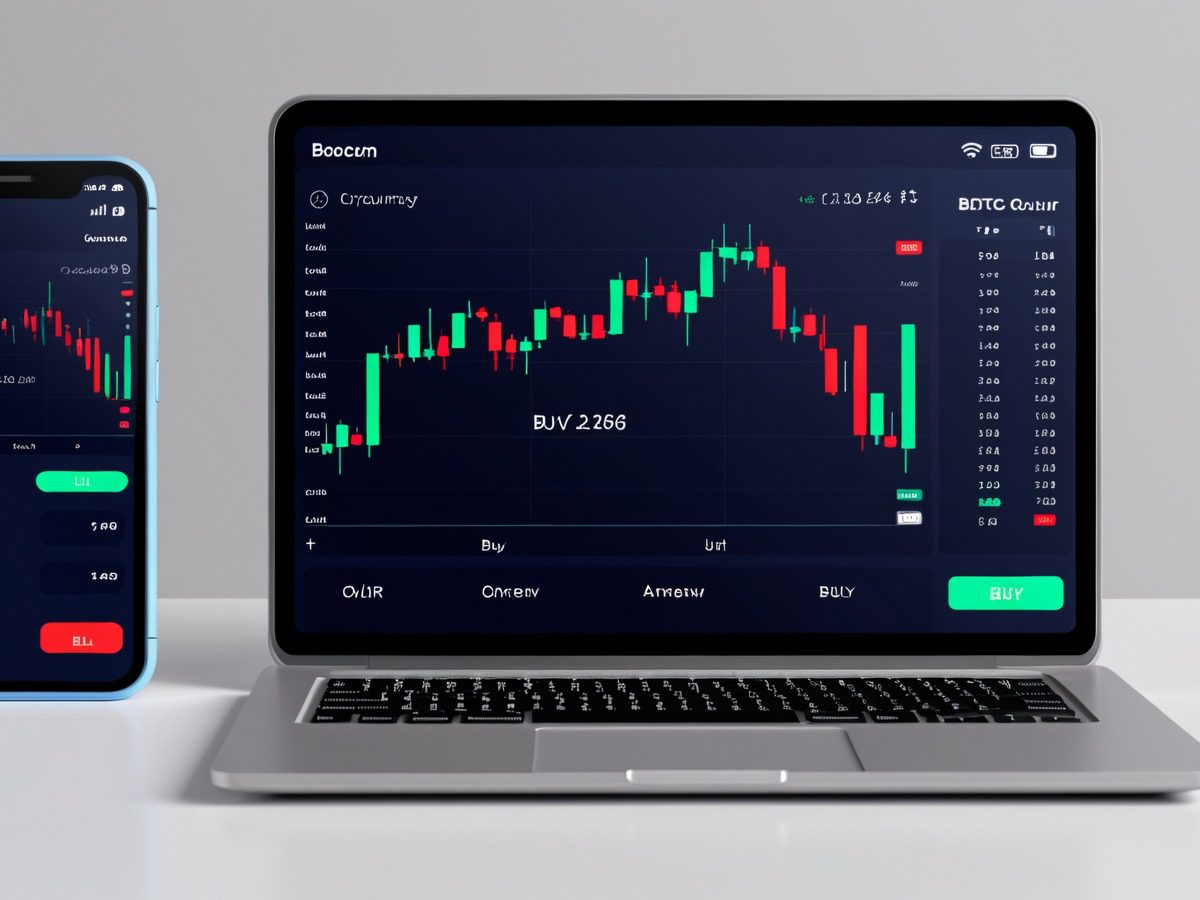
Sub-optimal performance leads to slow execution, which directly deters professional and institutional traders . In practice, a scalable engine should be capable of handling millions of transactions per second to prevent downtime during periods of extreme market volatility.
The trade-off is that you will likely need more specialized engineering and infrastructure spend to keep performance predictable at scale.
How Do You Expand Market Reach and Liquidity?
You expand liquidity by deepening order books and making sure traders can consistently fill large orders without significant price impact. Without deep order books, traders face high slippage , which pushes them toward larger competitors.
According to a Coherent Market Insights report , the global market is growing at a compound annual growth rate (CAGR) of 14.2%, but success depends on how well an exchange can aggregate liquidity across different regions.
| Company | Supported Coins | Spot Trading Fees | Learn More |
|---|---|---|---|
| Coinbase | +250 | $0.99 - 2.00% (Standard), 0.05% - 0.60% (Advanced Trade)
For transactions above $200 (standard account): 1.49% fee for using a bank account or USD wallet, 3.99% fee for using a debit or credit card. For Coinbase Advanced Trade: 0.60% for taker trades and 0.40% for maker trades. The more you trade, the lower the fees - can decrease to as low as 0% - 0.05%. |
Read Review |
| Kraken | +300 | 0.40% - 0.25%
0.40% for taker trades and 0.25% for maker trades. The more you trade, the lower the fees - can decrease to as low as 0% - 0.10%. Using GT tokens to pay trading fees offers a 10% discount |
Read Review |
| Binance.US | +120 | 0.10%
For both maker and taker orders. The more you trade, the lower the fees - can decrease to as low as 0.04%. Users who pay fees using Binance Coin (BNB) receive a 25% discount |
Read Review |
| Gemini | +150 | $0.99 - 1.49% (Web & Mobile), 0.20% - 0.40% (Active Trader)
For Gemini’s website or mobile app users are charged 0.50% convenience fee For Active Trader, 0.40% for taker trades and 0.20% for maker trades. The more you trade, the lower the fees - can decrease to as low as 0% - 0.03%. |
Read Review |
To scale, many exchanges employ market makers or integrate with external liquidity providers. This ensures that even as new asset pairs are added, there is enough depth to facilitate large trades without significant price impact.
Expanding into global markets also means matching local expectations, like region-specific fiat on-ramps and multi-language support.
Can Your Exchange Handle Global Regulatory Demands?
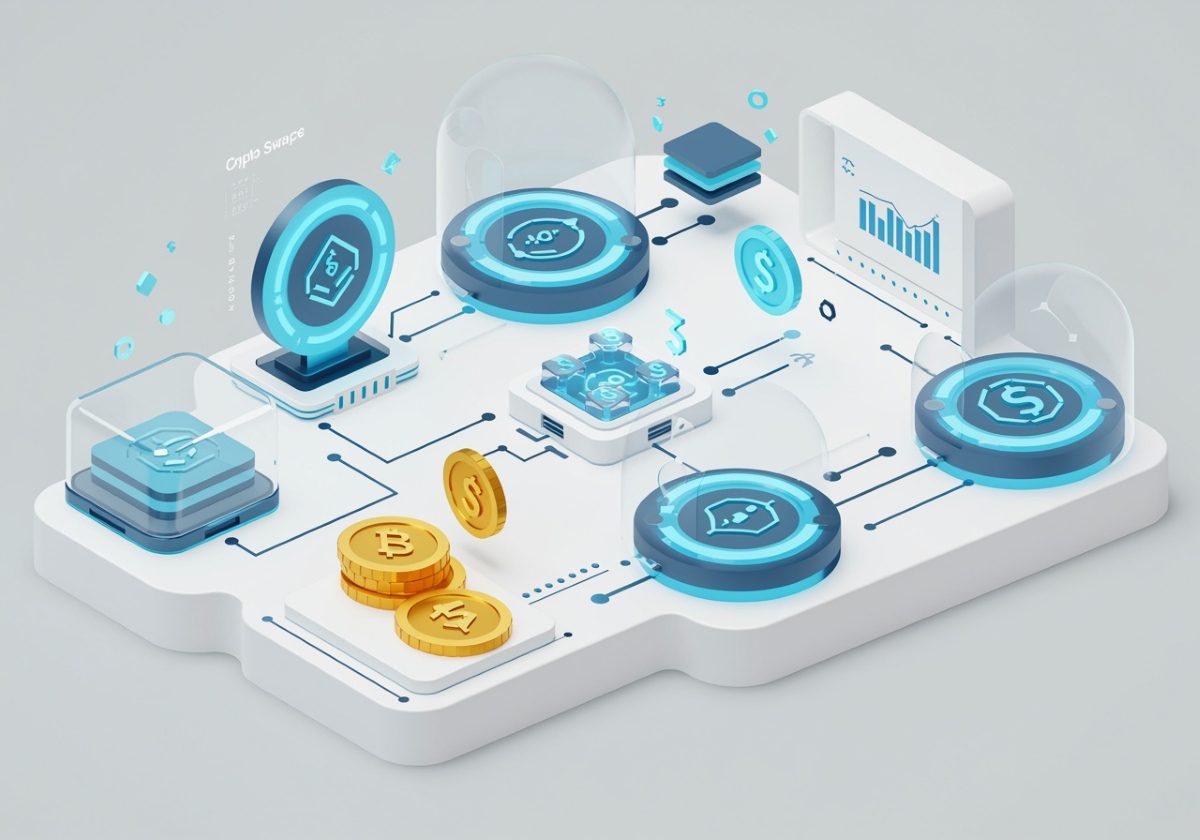
Your exchange can handle global regulatory demands only if compliance is built into onboarding, monitoring, and reporting, not bolted on later. Compliance is no longer optional for growth, it is a requirement for survival.
Large-scale players have demonstrated that regulatory transparency can lead to massive revenue surges. CoinLedger research highlights that Binance’s revenue grew from $0.1 billion in 2017 to over $17 billion by 2025.
Implementing robust Know Your Customer (KYC) and Anti-Money Laundering (AML) protocols is essential. These systems must be automated to handle rapid user growth without creating bottlenecks during the onboarding process.
Security also plays a role here, and advanced protocols like multi-party computation (MPC) for wallet security help protect the increasing volume of assets under management.
What Are the Best Strategies for Rapid User Acquisition?
The best user acquisition strategies for exchanges are referral-driven growth plus retention-focused support that keeps new users trading after signup. Referral and affiliate programs are among the most cost-effective ways to scale by leveraging existing users.
The catch is that acquisition alone will not save you if your product experience is shaky during high-volume periods. As your user base grows, your customer support infrastructure must scale in tandem.
Implementing AI-driven support tools and 24/7 localized assistance ensures that users feel supported regardless of their time zone.
In 2025, North America held 31.1% of the market share and was identified as the fastest-growing region, which makes targeted marketing and support in high-growth geographies especially important.
How Can You Use DeFi and New Assets to Retain Users?
You retain users by giving them more reasons to stay on-platform beyond spot trades, especially through DeFi features and broader asset coverage. While spot trading accounted for 61.3% of the market share in 2025, users are increasingly looking for diversified services.
Integrating Decentralized Finance (DeFi) services, such as staking, lending, and yield farming , can significantly increase user retention.
By offering a wider variety of asset classes beyond the top ten cryptocurrencies, an exchange becomes a one-stop shop for investors. This diversification helps stabilize revenue during bear markets when traditional trading volumes may decline.
Future-proofing your platform means staying ahead of trends in asset tokenization and cross-chain compatibility.
How Do You Manage Infrastructure Costs During Expansion?
You manage infrastructure costs by tracking unit economics like cost per transaction, then using scalable infrastructure to expand during peaks and pull back during slow periods. Scaling an exchange is capital-intensive and can cause costs to spiral.
According to Straits Research data , the market size was valued at $37.23 billion in 2025, but profitability depends on efficient operational management.
To manage costs, exchange operators should track KPIs like infrastructure cost per transaction and active user acquisition cost. Utilizing scalable cloud solutions allows you to pay for what you use, ramping up capacity only when needed.
In practice, this flexibility is what lets you protect margins while still meeting uptime and performance expectations.
The Bottom Line
Scaling a crypto exchange requires a sophisticated blend of technical excellence, liquidity depth, and regulatory foresight. By focusing on a high-speed matching engine and robust compliance, you can build a platform that attracts both retail and institutional volume.
Growth is consistent in this sector, but only for those who can maintain platform stability and security as they expand globally.
Read More
