

Crypto trading involves buying and selling digital assets such as Bitcoin or Ethereum, typically through online exchanges. For U.S. consumers, the goal is often to generate profit or gradually build a long-term position.
However, responsible crypto trading requires understanding order types, selecting a reputable platform, ensuring secure storage, and planning for market volatility and tax obligations. This guide offers a clear breakdown of these essentials, covering key terminology, trading mechanics, strategies, risk management, and U.S. tax considerations.
Key Takeaways
- Crypto trading typically happens on exchanges, where you place market or limit orders to buy and sell digital assets.
- Fees, security practices, asset selection, and user protections vary widely by platform, so comparison shopping matters.
- You can store crypto on an exchange (convenient) or in a wallet you control (more self-custody responsibility).
- Crypto is volatile and losses can happen fast, so position sizing, diversification, and security steps are essential.
- In the U.S., selling or trading crypto can create taxable events, and recordkeeping is part of the job.
What is cryptocurrency trading, and how is it different from investing?
Cryptocurrency trading usually refers to more frequent buying and selling to try to benefit from price movements. Investing typically implies a longer time horizon, fewer transactions, and a focus on long-term adoption or fundamentals.
In practice, the line can blur. A beginner might start by making occasional purchases and then later experiment with trades.
More trading generally means more fees and more tax lots to track. It also increases the chances of making emotion-driven decisions during volatile swings.
One important baseline: crypto holdings are not protected like bank deposits. According to FDIC deposit insurance guidance, deposit insurance applies to bank deposits at insured institutions, not to crypto assets themselves.
What key terms should beginners know before placing a trade?
You will see a lot of jargon on crypto platforms. For those new to the space, understanding these key terms in cryptocurrency for beginners tend to matter most on day one:
- Exchange: A platform where you can buy, sell, and sometimes stake or lend crypto.
- Trading pair: The two assets you are swapping, such as BTC/USD or ETH/USDC.
- Market order: Buys or sells immediately at the best available price. This is simple, but the price can move quickly.
- Limit order: Lets you choose the price you are willing to buy or sell at. It may not fill if the market never reaches your specified price.
- Spread: The difference between the highest bid and the lowest ask. Wider spreads can increase your effective cost.
- Liquidity: How easily an asset can be traded without moving the price too much. Bigger coins tend to be more liquid than small tokens.
- Stablecoin: A crypto token designed to track a reference value, often the U.S. dollar. Stablecoins can be useful for trading pairs, but they have their own risks.
- Custody: Who controls the private keys. If the exchange holds them, it is custodial. If you hold them, it is self-custody.
How do you choose the right cryptocurrency exchange platform?
Start with suitability and basic consumer protections rather than hype. Here is what to compare:
- Security track record and controls: Look for features like two-factor authentication, withdrawal confirmations, and transparent security practices.
- Fees and pricing model: Exchanges may charge trading fees, spreads, or both. Some also charge for deposits/withdrawals or blockchain network fees.
- Available assets: A beginner does not need hundreds of tokens. A smaller selection can reduce the temptation to chase risky coins.
- Ease of use: A clean interface and clear order screen help you avoid mistakes.
- Customer support and account recovery: Access issues happen. Clear recovery steps matter.
- On-ramps/off-ramps: Make sure you can fund your account in a way that works for you (bank transfer, debit card, etc.), and withdraw cash when needed.
To help you compare, here is a breakdown of several popular U.S.-available platforms and their typical fee structures:
| Exchange | Supported Assets | Standard Trading Fees | Advanced/Pro Fees |
|---|---|---|---|
| Binance.US | 120+ | 0.10% | 0.04% – 0.10% |
| Coinbase | 250+ | $0.99 – 2.00% | 0.05% – 0.60% |
| Gemini | 150+ | $0.99 – 1.49% | 0.20% – 0.40% |
| Kraken | 300+ | 0.25% – 0.40% | 0.02% – 0.05% (Futures) |
For a consumer-friendly overview of what to look for, NerdWallet’s cryptocurrency explainer covers key basics, including risks and common ways people buy and sell.
Should you use an exchange wallet or a separate crypto wallet?
Many beginners start by holding crypto on the exchange where they bought it. It is convenient, but it is custodial, meaning the platform controls the private keys.
For a deeper dive into controlling your keys, understanding the difference between custodial vs. non-custodial wallets is crucial.

A separate wallet, often called a non-custodial or self-custody wallet, can give you more control. However, it also gives you more responsibility.
If you lose your recovery phrase or send crypto to the wrong address, there is usually no customer service fix.
A practical way to think about it:
- Exchange custody can be simpler for small amounts and frequent trading.
- Self-custody may be appealing for longer-term holding, but only if you are comfortable safeguarding keys and following security best practices.
Whichever you choose, turn on strong authentication and protect your login and recovery information. Guidance from FTC consumer resources on cryptocurrency scams is a useful reminder that fraud and impersonation schemes are common in crypto.
How do you place your first crypto trade step-by-step?
The exact screens vary by exchange, but the workflow is usually similar:
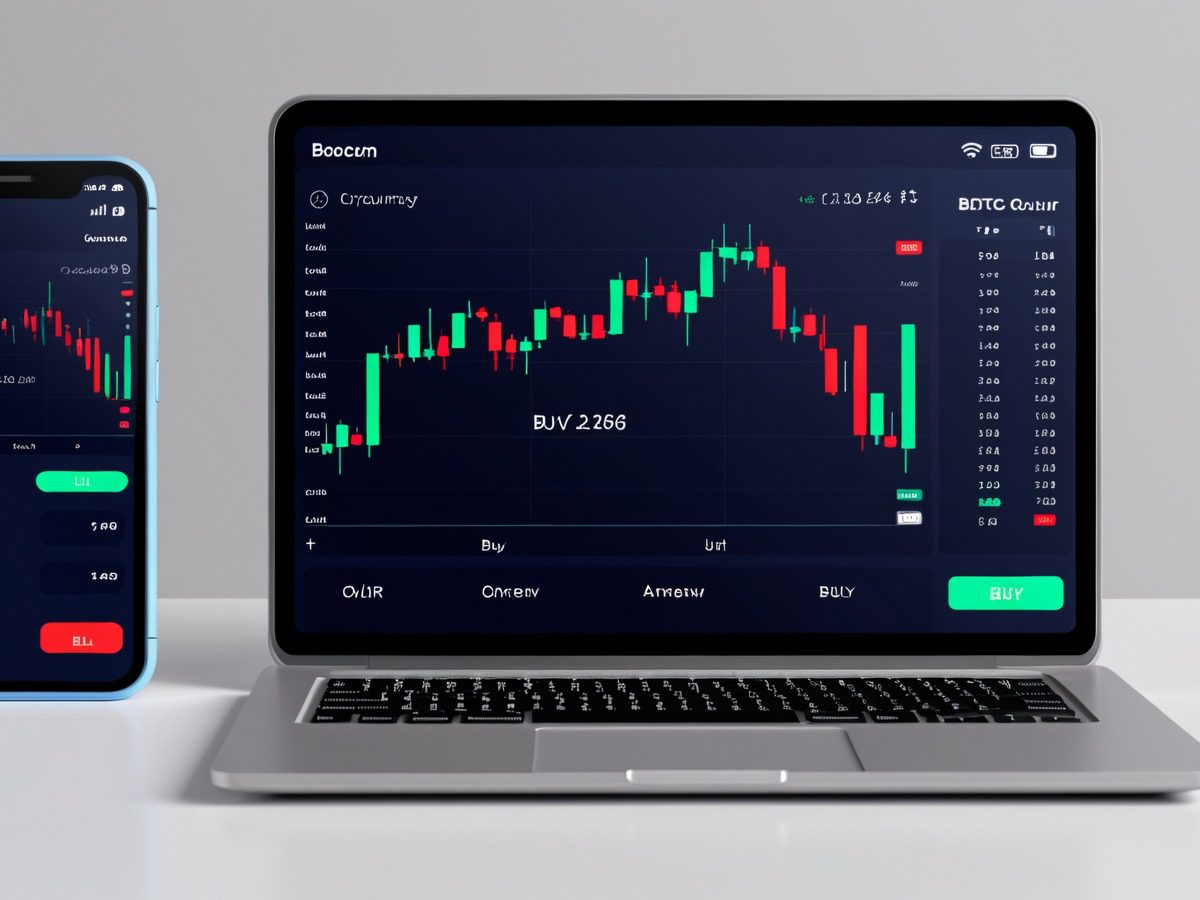
- 1. Create an account and verify your identity. Most U.S. exchanges use identity verification to comply with regulations.
- 2. Secure the account. Use a unique password and enable two-factor authentication.
- 3. Fund your account. Choose a funding method supported by the platform, for example, a bank transfer.
- 4. Pick an asset and a trading pair. Many beginners start with large, widely traded assets, then branch out only after learning the mechanics.
- 5. Choose an order type. Use a market order for simplicity if you accept that the final price can vary.
- 6. Set your trade size. Consider starting small until you are confident you understand fees, order execution, and price movement.

- 7. Review the order details. Double-check the asset, amount, fees, and whether you are buying or selling.
- 8. Place the trade and confirm the fill. After execution, check your balances and the order history.
Some platforms offer advanced tools like margin or derivatives. However, many beginners are better off skipping these until they understand liquidation risk and how leverage amplifies losses.
What are common crypto trading strategies (and what do they require)?
There is no universally best strategy, but here are a few common approaches and what they demand from you:
- Dollar-cost averaging (DCA): Buying a fixed dollar amount on a schedule. This is more of an investing approach that can reduce the stress of timing the market.
- Swing trading: Holding positions for days or weeks based on trends. This requires a plan for entry, exit, and how much you are willing to lose.
- Day trading: Multiple trades in a single day. This requires significant time, discipline, and comfort with rapid losses and fees.
- Range trading: Buying near an apparent support level and selling near resistance. This requires basic chart reading and risk controls.
- HODLing: Holding long-term regardless of volatility. This approach is simple, but it still requires risk tolerance and secure storage practices.
If you are new, the main goal is often process over prediction. This means understanding how orders execute, how fees add up, and how you will respond when prices move quickly.
How can you manage risk in a market as volatile as crypto?
Volatility is an inherent part of crypto. Risk management is what keeps volatility from becoming catastrophic.
Core risk controls many beginners use:
- Position sizing: Keep individual trades small relative to your overall finances.
- Diversification: Avoid concentrating everything in a single coin or token.
- Predefined exits: Know in advance what would make you sell (profit target, time-based exit, or a maximum loss).
- Avoiding leverage: Margin can magnify gains, but it can also accelerate losses and trigger forced liquidations.
- Security hygiene: Use two-factor authentication, watch for phishing, and be cautious with links, QR codes, and lookalike apps.
- Liquidity awareness: Smaller tokens can gap up or down sharply, especially in fast markets.
It also helps to stress-test your emotions. If a 20 percent drop would cause you to panic-sell, your position size may be too large for your personal risk tolerance.
What are the U.S. tax implications of trading digital assets?
In the U.S., crypto taxes can be triggered more often than beginners expect. Generally, selling crypto for dollars or trading one crypto for another can be a taxable event, depending on your situation.
Gains and losses are typically calculated by comparing your sale price to your cost basis, and the holding period can matter. You do not need to guess.
The IRS maintains a dedicated page on digital assets and taxes, including high-level rules and common questions. The practical takeaway is diligent recordkeeping: dates, amounts, fees, and what you traded for what.
If you do a lot of transactions, consider using tools or reports that help you export trade history. Also, keep an eye on how your exchange documents transactions.
What tips help beginners trade crypto more safely?
A few habits can reduce costly mistakes:
- Start with small trades until you understand order types, fees, and how fast prices can move.
- Turn on two-factor authentication immediately and store recovery codes securely.
- Be skeptical of “guaranteed returns,” celebrity impersonators, and unsolicited DMs about crypto.
- Know your plan before entering a trade: what would make you buy more, sell, or do nothing.
- Treat every transfer as irreversible: verify wallet addresses carefully and consider test transactions.
Frequently Asked Questions About Crypto Trading
How much money do I need to start trading crypto?
Many platforms allow small purchases, but the right starting amount is more about learning safely than meeting a minimum. Start with an amount you can afford to lose without impacting bills or emergency savings.
Is crypto trading safe?
It can be risky due to volatility, fraud, and security threats. Using reputable platforms, strong account security, and cautious position sizing can lower risk, but not eliminate it.
What is the easiest order type for beginners?
A market order is usually the simplest, but a limit order can help you control price. Beginners often use market orders for small initial trades and move to limit orders as they gain confidence.
Do I need a wallet to trade crypto?
Not necessarily. You can trade while your assets are held on an exchange. A separate wallet becomes more relevant if you want self-custody or plan to move crypto off-platform.
The Bottom Line
For U.S. consumers, effective crypto trading hinges on fundamental principles: using a reputable exchange, establishing a secure setup, and clearly understanding order types, fees, and market volatility. Starting with small trades, prioritizing security, and maintaining diligent tax records are crucial steps.
Approaching crypto trading as a skill to develop, rather than a quick path to wealth, generally leads to more informed and sustainable decisions.
Read More
- Best Crypto Apps for Beginners: Top Platforms for Easy & Secure Trading
- Best Beginner-Friendly Crypto Wallets
- How Much Should I Invest in Bitcoin? A Smart Investor’s Guide
- Best Crypto Exchanges for Day Trading: Top Platforms for High-Speed Trading & Low Fees
- What Is Slippage in Crypto? Causes, Risks, and Solutions
