Cardano (ADA) is a reasonable investment if you have a high risk tolerance and a multi-year timeframe. While it is one of the most established blockchain projects, its price remains highly volatile and sensitive to broader crypto market cycles.
In practice, Cardano is often a bet on a “slow and steady” approach to engineering rather than the rapid growth seen in other ecosystems.
Below is a practical breakdown of what Cardano is, how it has performed historically, what actually drives demand for ADA, and the key risks to weigh before buying.
Key Takeaways
- Not a “safe” investment: ADA is a speculative asset whose price can swing sharply, even if the underlying technology improves.
- Proof-of-stake is central: Cardano uses the Ouroboros proof-of-stake mechanism, which is designed to secure the network without energy-intensive mining.
- Ecosystem matters more than hype: Long-term value depends on real usage, like DeFi activity, apps, and developer adoption, not just price predictions.
- Competition is a real threat: Ethereum and other smart-contract networks compete directly for users, developers, and capital.
- Treat it as a portfolio “satellite”: Many consumers approach crypto as a small allocation alongside diversified, traditional investments.
What is Cardano (ADA), and what does it actually do?
Cardano is a blockchain platform that runs smart contracts and hosts decentralized applications, much like Ethereum. Its native token, ADA, is used to cover network fees, participate in staking, and interact with on-chain apps.
The trade-off is that while the technology is peer-reviewed, development can move slower than faster-paced competitors.

The project positions itself as research-driven, with a focus on formal methods and peer-reviewed approaches to protocol design. This can appeal to long-term investors who care about technical rigor, though it does not automatically translate into market adoption or price gains.
How does Ouroboros proof of stake work, and why do investors care?
Ouroboros is Cardano's proof-of-stake (PoS) consensus mechanism, which uses validators instead of energy-heavy mining to secure the network. For you as an investor, this means you can stake your ADA to earn rewards while helping secure the blockchain.
The mistake most people make is assuming staking rewards are “free” money, ignoring the risks of platform failure or price drops while assets are locked.
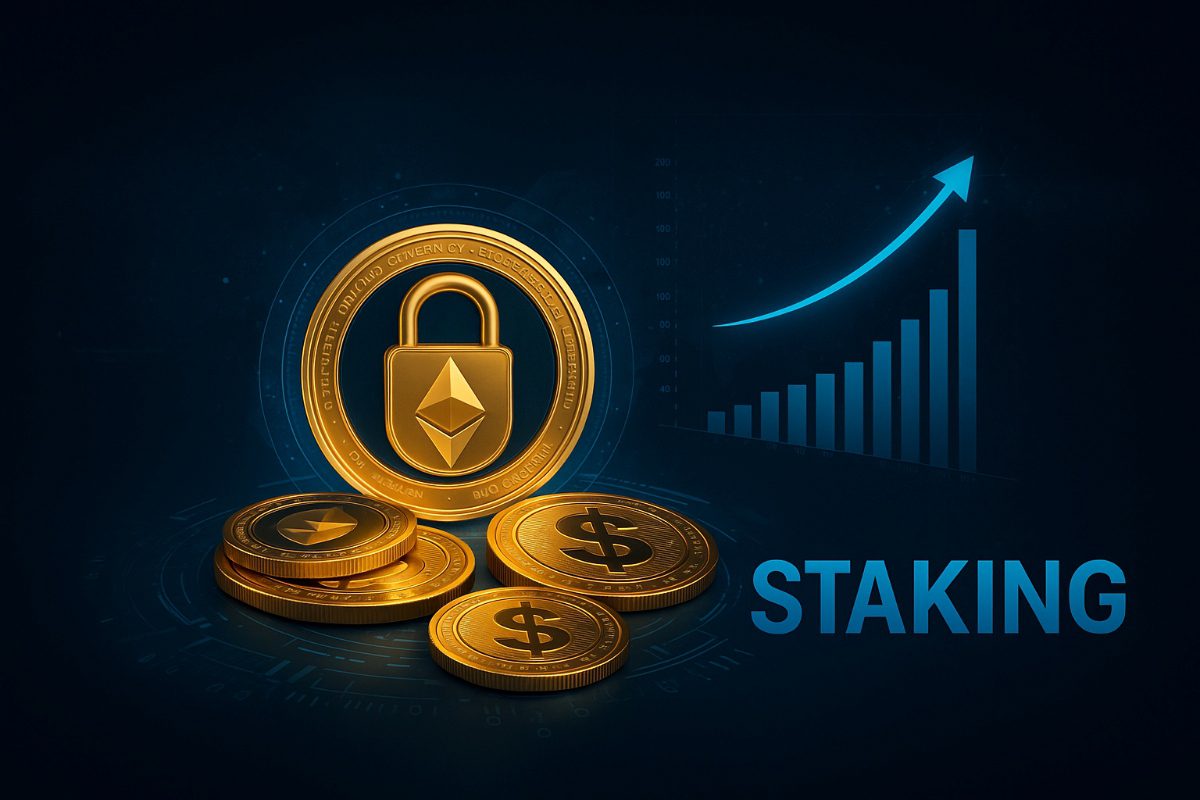
Rewards vary based on network rules, fees, and participation rates, and they are not guaranteed. The health of the staking ecosystem matters because it affects how resilient the network is to attacks and how distributed control is across participants.
Staking is not the same as earning interest in a bank account. It can come with risks like smart contract vulnerabilities or platform-specific custody issues.
How has ADA performed historically, and what does that say about risk?
ADA is a high-volatility asset that has historically experienced massive price swings in both directions. For example, some months see triple-digit gains while others see deep double-digit losses.
What actually matters here is your exit strategy, as buying during a hype cycle without a plan often leads to holding through a crash.
A Cardano backtest from Curvo’s Cardano index page shows positive returns in 17 out of 50 months from 2021 to 2025. It highlights how extreme single-month moves can be, including a 224.8% gain in November 2024.
Data like this does not predict future returns, but it underlines the fact that ADA's path is rarely smooth.
If you’re evaluating ADA, it helps to decide in advance how much drawdown you can tolerate without panic-selling. You should also determine whether you are buying for a short-term trade or a multi-year bet.
What is happening in the Cardano ecosystem and real-world use cases?
Cardano’s network value depends on active users, developer commitment, and the total value of assets locked (TVL) in its apps. As of early 2024, the network reached a milestone of over $500 million in TVL, according to The Standard’s Cardano investment analysis.
You should monitor whether this growth is driven by sustainable utility or temporary incentives.
When you research Cardano’s current utility, look for evidence of:
- Real user activity: Apps that maintain users without relying purely on rewards.
- Stablecoin liquidity: The depth and availability of stablecoins on the network.
- Developer momentum: Consistent updates and new tooling for builders.
- On-chain persistence: Activity that remains steady even outside of bull markets.
Cardano vs. Ethereum: what differences matter to crypto investors?
Cardano distinguishes itself from Ethereum through its specific technical architecture and research-heavy development process. While Ethereum’s market position remains dominant by mindshare and application breadth, Cardano focuses on long-term stability.
You don't necessarily need Cardano to “flip” Ethereum for it to be a successful part of your portfolio.
From an investment perspective, the most important differences involve network effects. Developers tend to build where users and liquidity already exist, which gives Ethereum a significant lead.
Liquidity is also vital, as decentralized finance is heavily dependent on deep capital pools and trusted infrastructure.
Ethereum has mature token standards and tooling that many developers find easier to use. Cardano has its own architecture, which can be a moat for specific use cases but a hurdle for general adoption.
What are the biggest risks of investing in ADA?
ADA’s upside is tied to adoption and market sentiment, but its downside risks are significant and straightforward.
- Market volatility: ADA often moves based on Bitcoin’s direction, liquidity conditions, and overall risk appetite.
- Competition risk: Multiple networks are competing for the same developers and capital as Cardano.
- Regulatory uncertainty: U.S. rules for crypto assets and staking services continue to evolve, which can affect your access and pricing.
- Custody risk: Holding ADA on an exchange adds counterparty risk, while using DeFi adds smart contract risk.
- Narrative risk: Prices can detach from fundamentals for long periods in either direction.
If you’re new to investing, it is worth grounding crypto decisions in the basics of risk and diversification. The SEC’s Investor.gov investing basics is a helpful, plain-English place to start.
Is Cardano a good long-term investment, and what should you watch in 2026?
Whether Cardano is a good long-term investment depends on the network's ability to turn technical milestones into mainstream adoption. A reasonable long-term thesis is that Cardano grows into a durable network where ADA demand increases alongside real activity.
The trade-off is that shifting developer attention could prevent Cardano from ever achieving sustained network effects.
Watch for these indicators of health without trying to time the market:
- The growth and stickiness of DeFi activity over several quarters.
- The quality and user experience of new decentralized apps.
- Changes in stablecoin availability and overall network liquidity.
- Regulatory changes that specifically impact staking or exchange access.
Treat price predictions, such as Axi’s ADA price predictions roundup or commentary on Binance Square, as sentiment indicators. Predictions vary widely and can be wrong even when the reasoning sounds convincing.
How can you buy and store ADA more safely?
If you decide ADA fits your risk profile, focus on secure execution by using highly-rated crypto exchanges. Choose platforms that offer competitive fees and robust security measures to protect your capital.
| Exchange | Spot Trading Fees | Supported Coins | Learn More |
|---|---|---|---|
| Coinbase | $0.99 - 2.00% (Standard), 0.05% - 0.60% (Advanced Trade)
For transactions above $200 (standard account): 1.49% fee for using a bank account or USD wallet, 3.99% fee for using a debit or credit card. For Coinbase Advanced Trade: 0.60% for taker trades and 0.40% for maker trades. The more you trade, the lower the fees - can decrease to as low as 0% - 0.05%. |
+250 | Read Review |
| Crypto.com | 0.075%
For both maker and taker orders. The more you trade, the lower the fees - can decrease to as low as 0% - 0.050%. Holding and staking CRO tokens, Crypto.com native token, unlocks additional fee discounts. |
+350 | Read Review |
| Kraken | 0.40% - 0.25%
0.40% for taker trades and 0.25% for maker trades. The more you trade, the lower the fees - can decrease to as low as 0% - 0.10%. Using GT tokens to pay trading fees offers a 10% discount |
+300 | Read Review |
| Binance.US | 0.10%
For both maker and taker orders. The more you trade, the lower the fees - can decrease to as low as 0.04%. Users who pay fees using Binance Coin (BNB) receive a 25% discount |
+120 | Read Review |

- Pick a secure exchange: Choose a platform with strong security track records and low fees.
- Secure your account: Use a password manager and multi-factor authentication to prevent unauthorized access.
- Transfer to a private wallet: Move your ADA to a hardware wallet for long-term storage safety.
- Check staking requirements: Research lock-up periods before committing your tokens to a validator pool.
For many households, the most important safety move is position sizing. Only invest an amount you can afford to lose without derailing your other financial goals.
The Bottom Line
Cardano can be a viable speculative investment, but it is not a perfect fit for every portfolio. ADA’s long-term case hinges on its ability to compete in a crowded market and generate sustained real-world usage.
If you are considering ADA, treat it as high-risk, keep the position small, and prioritize secure storage.
