

A crypto wallet is a digital tool that manages the private keys required to access and move your cryptocurrency on a blockchain. It doesn't actually store coins like a physical wallet holds cash; instead, it acts as a secure gateway to your assets, which live permanently on the network.
In this guide, you’ll learn how crypto wallets work, the difference between hot and cold wallets, and how to pick a version that fits your needs. Understanding these distinctions matters because your choice determines how much control, and how much responsibility, you have over your digital wealth.
Key Takeaways
- A wallet stores keys, not coins: Your crypto lives on the blockchain; your wallet manages the digital credentials that control it.
- Private keys are the critical secret: Anyone with your private key or recovery phrase can take your crypto instantly.
- Hot vs. cold is about internet exposure: Hot wallets are connected for convenience, while cold wallets stay offline for safety.
- Custodial vs. non-custodial changes control: Custodial wallets are managed by a company, whereas non-custodial wallets put you in charge of security.
- Security basics prevent most losses: Backups, careful verification, and phishing awareness are more effective than high-tech features.
What is a crypto wallet and how does it work?
A crypto wallet creates and manages cryptographic keys that allow you to interact with a blockchain. When you receive crypto, you provide a wallet address derived from your public key, which functions much like a bank account number.
When you send crypto, your wallet uses your private key to sign a transaction, proving you authorized the transfer. Most wallets also provide a portfolio view, address generation, transaction history, and network management tools.
It is vital to keep expectations realistic: crypto transactions are typically not reversible. Protections you may be used to with bank accounts and credit cards generally do not apply here.
The Federal Trade Commission warns about crypto-related scams and irreversible transfers at the FTC’s cryptocurrency and scams resource.

What’s the difference between public keys and private keys?
Your public key acts as your digital address for receiving funds, while your private key acts as the master password that authorizes transactions. Think of the public key like an email address and the private key like the login credentials to that email account.
If someone gets your private key or recovery phrase, they can move your crypto. If you lose your recovery phrase and your device fails, you may lose access permanently.
Before moving funds, it is vital to understand how to set up your keys correctly to avoid accidental loss.
Many wallets generate a 12- or 24-word recovery phrase during setup. These words are effectively the keys to your digital vault.
Treat them like the most sensitive financial credential you own and never store them digitally.
Hot wallets vs. cold wallets: what’s the difference?
The terms “hot” and “cold” describe whether the wallet’s keys are exposed to an internet-connected environment. The trade-off is almost always a balance between immediate convenience and long-term security.
- Hot wallets: These are mobile apps, desktop programs, or browser extensions that stay connected to the internet. They are convenient for frequent trading but are more exposed to phishing and malware.
- Cold wallets: These keep private keys offline, often using hardware devices like a USB stick. They are less convenient for daily use but are generally preferred for storing large, long-term holdings.
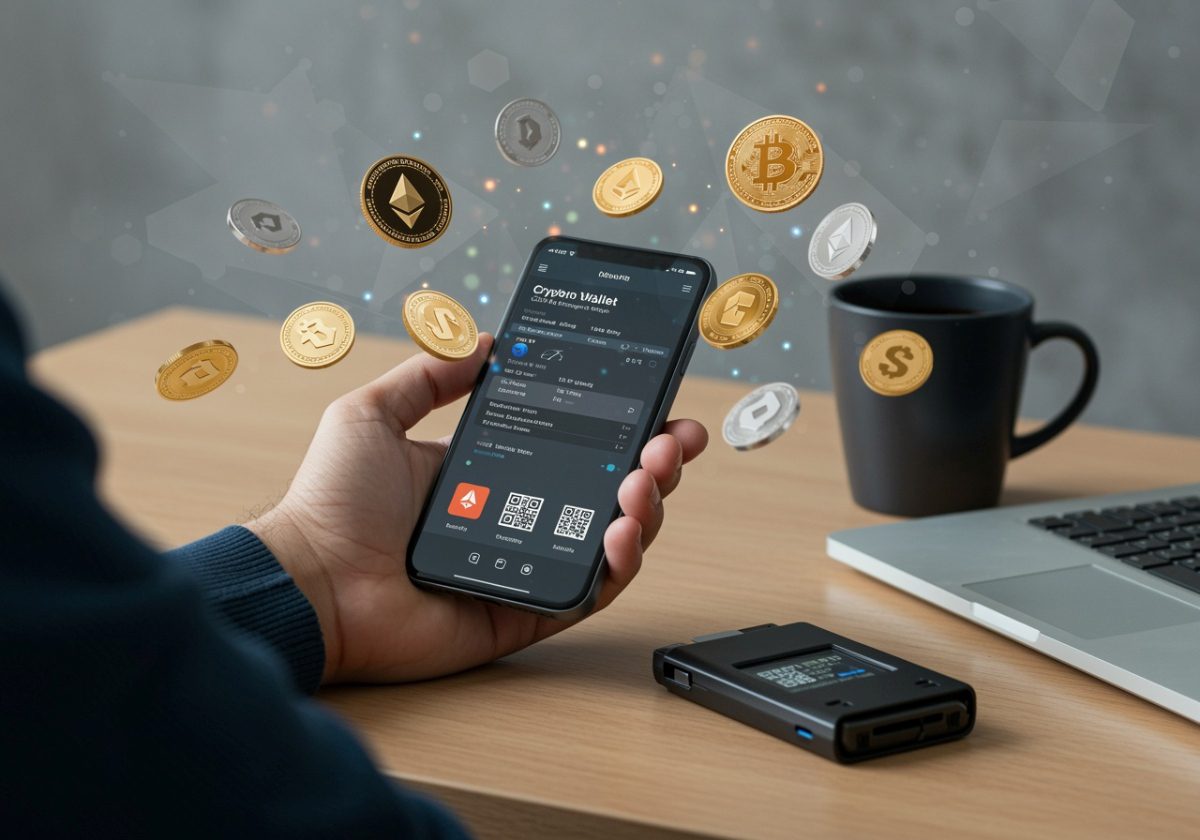
A practical approach many users take is separation: a hot wallet for small, everyday amounts and a cold wallet for long-term storage. NerdWallet notes that choosing between these often comes down to how much exposure you can tolerate.
You can find more details in NerdWallet’s explanation of crypto wallets.

What are the major types of crypto wallets?
Most wallets fit into three distinct categories based on the platform they use.
- Software wallets: These are apps you install on your phone or computer. They are usually free and easy to use, though your security depends heavily on your device's hygiene.
- Hardware wallets: These are dedicated physical devices built to keep private keys isolated from your computer. Popular brands like the Ledger Nano provide high security but require you to safeguard a physical device.
- Paper backups: This involves writing your recovery phrase on a durable physical medium. While it protects you from hackers, paper is vulnerable to fire and water damage, so some users prefer metal backup plates.
Custodial vs. non-custodial wallets: which should you use?
The primary difference lies in who holds the keys: a custodial wallet is managed by a third party, while a non-custodial wallet gives you exclusive control. In practice, custodial wallets offer more convenience, but non-custodial wallets eliminate the risk of a company freezing your account.
- Custodial wallets: A company holds the keys on your behalf, similar to how a bank holds your cash. Leading platforms like Coinbase and Gemini offer custodial services where they manage security for you.
- Non-custodial wallets: You control the keys and can move funds without asking permission. However, you are responsible for your own backups, and there is no “forgot password” button if you lose your recovery phrase.
Focus on what custodial risk you prefer to manage: trusting a company versus being your own security team. Bankrate’s consumer guidance also highlights these trade-offs for different types of investors.
See Bankrate’s crypto wallet guide for further context.
How do you choose the best crypto wallet for your needs?
Start with how you plan to use crypto, then match wallet features to that specific use case. What actually matters here is that your wallet supports the specific coins you plan to buy and offers a fee structure that fits your trading habits.
| Platform | Wallet Supported Coins | Wallet Swap Fee | Learn More |
|---|---|---|---|
| Coinbase | +3,000 | 1% | Read Review |
| Kraken | +2,000 | 0%
Users still need to pay blockchain network fees (gas fees) and potential liquidity provider fees when swapping assets |
Read Review |
| Gemini | +150 | $0.99 - 1.49% (Web & Mobile), 0.20% - 0.40% (Active Trader)
For Gemini’s website or mobile app users are charged 0.50% convenience fee For Active Trader, 0.40% for taker trades and 0.20% for maker trades. The more you trade, the lower the fees - can decrease to as low as 0% - 0.03%. |
Read Review |
- Transaction frequency: If you trade daily, a reputable hot wallet with biometric locks is best. If you buy and hold, a hardware wallet is the safer choice.
- Asset compatibility: Not every wallet supports every blockchain. Confirm that your chosen wallet works with the specific tokens you want to own before you send money.
- Technical comfort: If you are uncomfortable managing a recovery phrase, a custodial option may feel simpler. If you value independent control, non-custodial is the standard.
- Security track record: Look for wallets with transparent support documentation and a long history of protecting user funds.
How do you set up your first crypto wallet step-by-step?
The exact steps vary by brand, but the safe setup flow follows a standard pattern.
- Choose your wallet type: Decide between software or hardware and custodial or non-custodial based on your comfort level.
- Download from official sources: Only use official websites or app stores. Avoid clicking on sponsored search results, which can lead to fake apps.
- Secure the recovery phrase: If your wallet is non-custodial, write down the 12-24 words on paper. Store this in a private, secure location where it won't be damaged.
- Enable access controls: Set a strong PIN or password and enable biometric locks on mobile devices. For custodial accounts, always turn on multi-factor authentication.
- Perform a test transfer: Send a very small amount of crypto to the wallet first. Confirm you can receive and then send that small amount before moving larger sums.
Remember that FDIC insurance generally covers deposits at insured banks, not price losses or most crypto holdings. The FDIC’s consumer resources explain these limits at FDIC deposit insurance basics.
What security tips protect your crypto from hacks and scams?
Most crypto losses come from preventable issues like phishing, fake support, and malware. In practice, your own habits are a more powerful defense than any specific software feature.
- Never share your recovery phrase: No legitimate wallet provider or exchange support will ever ask for your 12 or 24 words.
- Verify addresses carefully: Malware can sometimes replace a copied address with a different one. Always double-check the first and last five characters before hitting send.
- Use official bookmarks: Save the official URLs for your wallet providers and exchanges. This prevents you from accidentally landing on a phishing site via a search engine.
- Keep software updated: Security patches are your first line of defense against known vulnerabilities. Always update your wallet app as soon as a new version is released.
What are common crypto wallet mistakes to avoid?
The mistake most people make is underestimating how final a crypto transaction is. These errors show up repeatedly in real-world loss reports and are almost always permanent.
- Digital storage of keys: Storing your recovery phrase in cloud notes or taking a screenshot is a major risk. If your phone or cloud account is hacked, your funds are gone.
- Falling for “support” scams: Scammers often impersonate customer service on social media. They will offer to “verify” your wallet by asking for your secret phrase.
- Sending on the wrong network: Sending Bitcoin to an Ethereum address (or vice versa) can result in a total loss of funds. Always confirm the network matches on both ends.
- Neglecting emergency planning: Ensure a trusted person knows where your recovery phrase is. Without a plan, your digital assets could be lost to your family forever.
The Bottom Line
A crypto wallet is how you manage the keys that control your digital assets on a blockchain. Choosing the right one comes down to your comfort with self-custody and how often you plan to move your funds.
If you do one thing, let it be this: protect your recovery phrase like it is cash and use small test transfers every time you try something new.
