

You can test gold by combining a few quick at-home checks with more definitive methods. These include hallmarks, magnets, and vinegar, along with acid testing, density calculations, and professional XRF scans.
This matters because convincing counterfeits and gold-plated pieces can look legitimate. A small purity difference can mean a real hit to value.
As the market for precious metals grows, so does the sophistication of counterfeits. According to data from Future Market Insights, the gold tester market is projected to reach $2.7 billion by 2035.
This growth is driven by a surge in purity testing needs at jewelry showrooms and refineries. Whether you are checking a family heirloom or a new bullion purchase, using the right verification method helps ensure you are paying for actual gold.
Key Takeaways
- Visual hallmarks: Stamps like “14K” or “585” indicate purity but can be forged and should be verified.
- Magnet and vinegar tests: These are quick DIY filters to spot obvious fakes but are not definitive.
- Acid testing: This “touchstone” method is a reliable way to determine specific karat values at home.
- Professional XRF scanning: This is the most accurate non-destructive method, capable of determining purity up to 99.99%.
Why is it essential to test gold before buying?
Testing gold protects your money from “fools gold” and sophisticated plated alloys like tungsten. Tungsten shares a similar density to gold, making it a common material for fakes.
In practice, the higher the value of the piece, the less you want to rely on a single DIY test. The Purity Test segment is estimated to account for 60% of all gold-testing revenue, highlighting how much emphasis buyers place on verification.
If you purchase gold from a private individual or a non-certified dealer, you assume the risk of the item being under-karated. This is one of the most common gold buying mistakes for new collectors.
For example, a ring sold as 18-karat gold that is actually 14-karat represents a significant loss in value. Verification ensures that the weight and purity match the asking price.

What do hallmarks and visual signs reveal?
Hallmarks and visual wear tell you what the piece claims to be and whether it might be plated or altered. The first step in any evaluation is a visual inspection, often using a magnifying glass.
Common U.S. markings include 10K, 14K, 18K, and 24K. All of these directly impact a gold coin value or jewelry appraisal.
In Europe, you might see decimal marks like 585 (14K) or 750 (18K). The trade-off is that stamps are easy to copy, so you should treat hallmarks as a starting point, not proof.
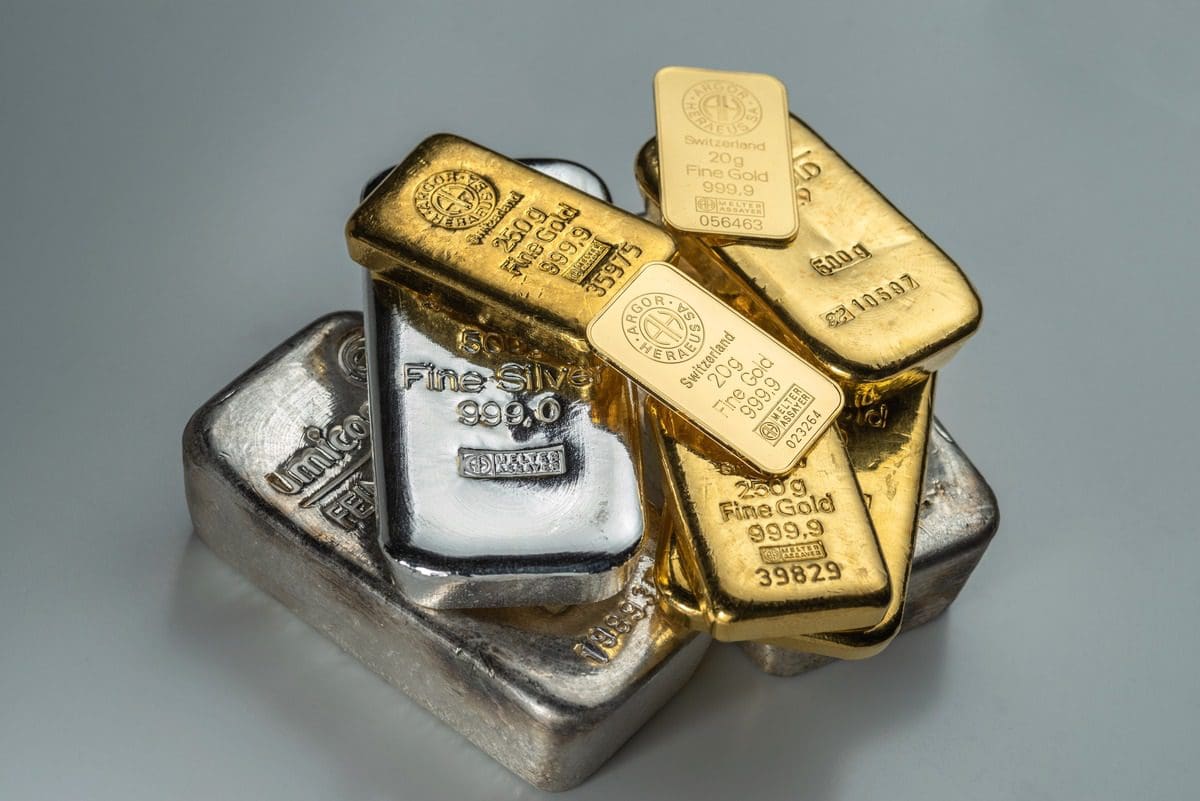
You should also look for signs of wear. As Bullion Exchanges explains, checking for discoloration where gold has worn away is a primary indicator of gold-plated items.
If you see silver or copper tones peeking through the gold surface, the item is likely plated rather than solid.
How do simple at-home physical tests work?
Simple physical tests can quickly rule out obvious fakes, but they cannot confirm purity on their own. It is important to use them as filters before moving to acid testing or professional scanning.
- The magnet test: Real gold is not magnetic. If your item is attracted to a strong neodymium magnet, it likely contains a base metal core like iron or nickel.
- The float test: Gold is significantly denser than most metals. If you drop a gold coin or ring into water, it should sink immediately.
- The ceramic scratch test: Dragging the item across an unglazed ceramic plate can leave a streak. A gold streak suggests real gold, while a black streak suggests a different metal.
Does the vinegar test work for verifying gold?
The vinegar test can help spot some fakes, but it is not reliable enough to confirm gold purity. Because gold is a noble metal, it is highly resistant to oxidation and acid.
To perform the test, apply a few drops of white vinegar to the metal. If the metal changes color or begins to smoke, it is not real gold.
If the appearance remains unchanged, it may be authentic gold or high-quality gold plating. As Luxury Brand Jewellery notes, this works best as a secondary check.
How does the nitric acid test verify karats?
Nitric acid testing can tell you whether a piece matches a specific karat level. This “touchstone” method involves rubbing the gold item against a black stone to leave a small streak of metal.
You then apply nitric acid of varying strengths to that streak. As The Alloy Market explains, different concentrations correspond to different karat levels (10k, 14k, 18k, and 22k).
If the acid dissolves the mark, the gold is lower purity than that specific acid’s rating. If the mark stays, the gold is at least that karat.
This method involves hazardous chemicals and leaves a microscopic scratch on the item. It is best for pieces where absolute certainty is worth that small risk.
Is the water density test reliable for consumers?
The water density test is scientifically reliable, but it is easy to get wrong at home without precise tools. Archimedes' Principle allows you to calculate the density of an item to see if it matches gold (19.3 g/mL for 24K).
This method remains a staple for those buying gold and silver for physical storage. You weigh the item in air and then while submerged in a graduated cylinder of water.
The trade-off is accuracy. Air bubbles, water movement, and imprecise scales can skew results, and hollow jewelry will not give clean readings.
What are professional XRF and ultrasonic scanning methods?
Professional XRF and ultrasonic tests give you the most dependable results without damaging the piece. For high-value investments, professional laboratory testing is the gold standard.
X-ray Fluorescence (XRF) scanners provide an elemental breakdown without harming the gold. According to research from VRXRF, XRF analysis can achieve high reproducible precision.
This technology identifies the percentage of gold, silver, copper, and zinc in an alloy. For the ultimate verification, professionals use the “fire assay” or “melt-and-assay” method.
This involves melting a sample of the metal to separate gold from impurities. While 100% accurate, it is destructive and usually reserved for bulk refining.

When should you seek a professional gold appraisal?
You should get a professional appraisal when the value is high or the piece lacks trustworthy markings. If your at-home tests point in different directions, a professional can settle it quickly.
Most reputable jewelers and gold dealers use XRF scanners or electronic testers that measure electrical conductivity. These methods provide a clear answer in seconds, which is often worth the small fee.
If your testing confirms authenticity and you want to expand your collection, comparing dealer requirements is the next step.
| Dealer | Minimum Investment | Storage Fee | Learn More |
|---|---|---|---|
| American Hartford Gold | $5,000 / $10,000
$5,000 for cash purchases / $10,000 for gold IRA |
$200 - $280 | Read Review |
| Goldco | $15,000 / $25,000
$15,000 for cash purchases / $25,000 for gold IRA |
$100 - $150
Non-Segregated: $100 | Segregated: $150 per year . Estimated annual fee. |
Read Review |
The Bottom Line
Testing your gold protects your financial interests. Start with visual and magnetic checks to filter out obvious fakes.
Use acid testing or a professional XRF scan for anything high-stakes. Combining methods is the simplest way to avoid paying solid-gold prices for counterfeit metal.
Read More
