

Humans began collecting gold as early as the 5th millennium BCE, with archaeological evidence pointing to the Varna Necropolis in Bulgaria as the site of the oldest processed gold. While the metal formed through cosmic events billions of years before Earth existed, its history as a human treasure spans over 6,500 years.
It has evolved from a simple decorative ornament into the world's most enduring financial safe haven.
This article walks through gold’s origins, the earliest evidence of human use, and how it became money. You will also learn why gold rushes shaped the U.S. economy and what this long history means for you if you're considering gold as an investment today.
Key Takeaways
- Gold’s origin: Gold formed through extreme cosmic events long before Earth, then became concentrated in the crust over geologic time.
- Earliest human evidence: Some of the oldest known worked gold artifacts come from the Varna Necropolis, often dated to around 4600 BCE.
- Early uses: Gold’s beauty, rarity, and resistance to corrosion made it a status symbol in multiple ancient civilizations, including ancient Egypt.
- From ornament to money: Gold coins later helped standardize trade and store value, accelerating the metal's role in global finance.
- Modern relevance: History explains why investors still treat it as a “store of value,” even though its daily price fluctuates.
When was gold first discovered by early humans?
Gold was likely first discovered by humans during the Copper Age, roughly 4600 BCE, though its use probably predates any written records. Because gold appears in nature as bright, recognizable nuggets and flakes, it likely drew human attention much earlier than metals requiring complex smelting.
What we can date with certainty is human use through archaeological evidence. One of the most notable discoveries is the Varna Necropolis, a Copper Age cemetery in Bulgaria, where burials contained abundant gold objects.
In practice, early gold functioned as both personal adornment and a marker of social status.
Reporting on the Varna gold finds highlights how these items represented the first clear evidence of social hierarchy.
Separately, early goldworking evidence appears in the Nile Valley between 4000-3500 BCE, including beads associated with ancient Egyptian craftsmanship.
What’s the earliest archaeological evidence of gold artifacts?
The oldest processed gold artifacts ever found come from the Varna Necropolis in Bulgaria, dating back to approximately 4600 BCE. Construction workers unearthed the site in 1972, revealing a massive trove of processed gold jewelry and ritual items.
This discovery, detailed in the Times of India write-up on Varna, proves that humans were crafting sophisticated gold goods very early in recorded archaeology.
It’s also important to separate “gold artifacts” from formal “gold mining.” Early humans likely collected “placer gold,” which is gold washed into riverbeds, without needing to dig deep into the earth.
However, archaeological records suggest formal gold mining began around 4000 BCE, marking a shift toward systematic extraction.
How did gold shape early civilizations like ancient Egypt?
Gold shaped ancient Egypt by serving as the primary symbol of divinity and eternal status, with refined craftsmanship appearing as early as 4000 BCE. The metal's physical properties made it perfect for this role, as it is easy to work, visually striking, and highly resistant to corrosion.
Across early civilizations, gold signaled power and permanence, especially in ritual or elite contexts. Evidence of early goldworking in the Nile Valley includes beads and polished items, suggesting that craftspeople already understood how to shape gold into wearable forms.
For modern readers, the key idea is that gold’s “brand” as something special is not new. Its cultural value predated its financial value by centuries.
This helps explain why it remains emotionally and socially resonant in your digital economy today.
When did gold coins become official currency?
Gold coins first became official currency in the 6th century BCE within the Kingdom of Lydia, located in modern-day Turkey. This transition from decoration to money happened as expanding trade routes required a standardized way to pay for goods and store wealth.
What actually matters here is the innovation of the coin itself. A coin’s stamped weight and purity reduced the need for constant negotiation and assaying during trade.
That trust and standardization helped gold become “money-like” across different borders and eras.

In practical terms, once gold became coinage, it was easier to price goods and collect taxes. It also allowed rulers to pay soldiers and accumulate reserves, which strengthened gold’s role as a financial anchor for entire nations.
Why did gold become a global standard for financial value?
Gold became the global financial standard because it is chemically stable, easily divisible, and rare enough to maintain high value without being impossible to find. These traits helped gold function as a common language of value across different cultures.
- Scarcity: It is rare enough to be valuable, but not so rare that it cannot circulate as a medium of exchange.
- Durability: It does not rust or rot, which is essential for the long-term storage of your wealth.
- Divisibility: It can be divided into small units or melted into large bars without losing its intrinsic value.
- Portability: A large amount of financial value can be stored in a relatively small, heavy amount of metal.

Even when countries moved away from formal gold standards, the habit of viewing gold as an “ultimate” asset persisted. This history still influences how you might react to inflation fears or geopolitical risks today.
How did gold mining techniques evolve over history?
Gold mining evolved from simple stream-side collection to deep-shaft excavation and complex industrial processing over several millennia. This evolution was driven by an increasing demand for the metal that surface-level nuggets could no longer satisfy.
- Early collection: People picked up nuggets and flakes directly from the ground or riverbeds.
- Basic mining: Societies began digging shallow pits and tunnels as their geological knowledge grew.
- Industrial mining: Modern techniques use large-scale excavation and chemical processing to extract gold from deep ore.
For consumers, mining history matters because the total supply affects the price over long periods. New discoveries or improved extraction methods can influence how much gold reaches the market and impacts your portfolio.
Which gold rushes changed the world, including in the U.S.?
The California Gold Rush of 1848 is the most influential discovery in U.S. history, but similar booms in Australia and South Africa also reshaped global migration. These events compressed years of economic development into short, frantic bursts.
In the U.S., the discovery at Sutter’s Mill in Coloma transformed California’s economy almost overnight. The state’s own records show how this discovery triggered a global bonanza and helped build the infrastructure of the American West, as noted by the California Department of Conservation.
The trade-off is that while gold rushes create massive wealth, they also highlight that extracting gold is expensive and risky. New supply often arrives in waves, but it is rarely fast enough to keep up with sudden spikes in demand.
How does gold’s history affect today’s investment prices?
Gold’s history anchors today’s prices by cementing its reputation as a “store of value” that investors turn to during times of inflation. While history doesn't set the daily price, it explains why you might treat gold differently than a stock or a bond.
In modern markets, gold is often viewed as:
- A store of value: This is rooted in thousands of years of social trust in the metal's worth.
- A hedge-like asset: You might buy it when you are worried about financial stress, though it offers no guaranteed protection.
- A non-yielding asset: Unlike a bond, gold’s return depends entirely on price changes rather than interest payments.
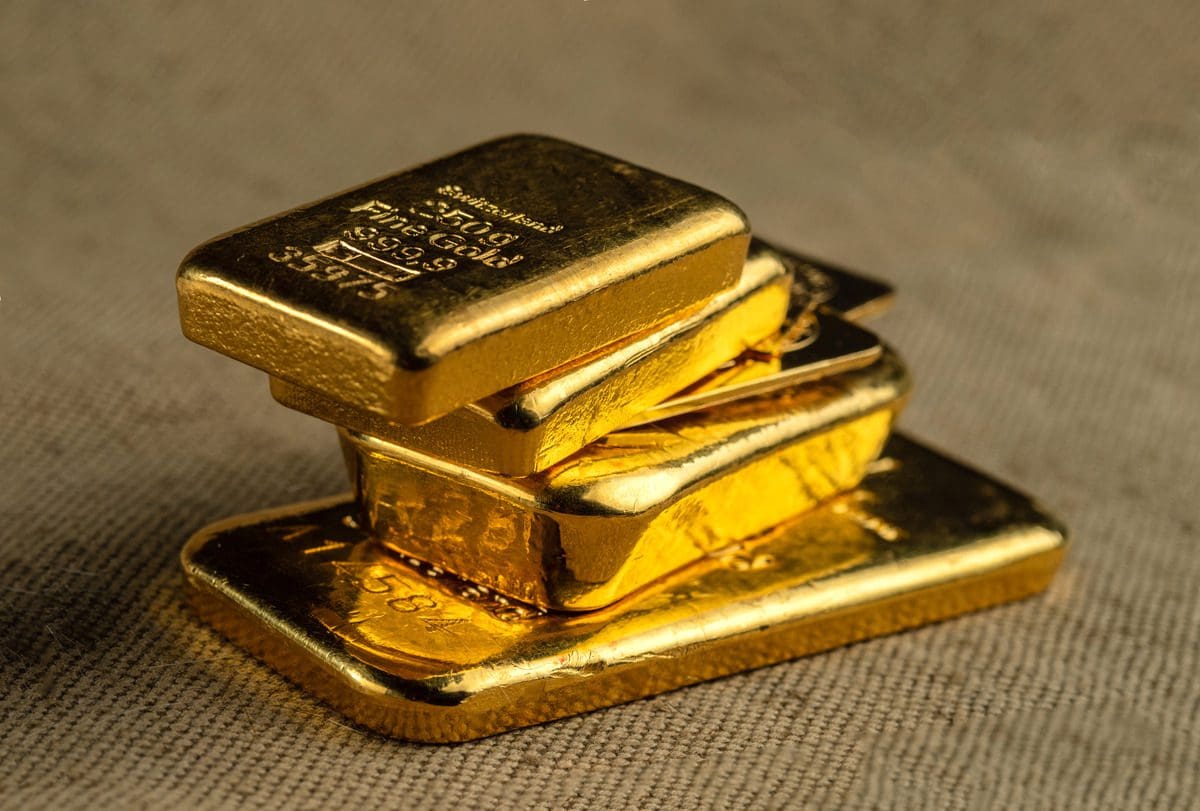
If you’re evaluating gold today, the first step is to decide what role it plays in your financial plan. You should then compare vehicles like physical gold, ETFs, or mining stocks based on your specific needs for liquidity and storage.
The Bottom Line
Gold was used by humans at least as far back as the 5th millennium BCE, with the most famous early artifacts discovered at the Varna Necropolis. Over thousands of years, it shifted from a ritual ornament to a standardized currency and finally to a modern investment.
If you are considering gold today, focus on your specific financial goals and choose the most practical way to gain exposure while accounting for costs and risks.
Read More
