

A “gold number” in investing usually refers to the golden ratio, a mathematical constant of about 1.618. Traders most often use it through Fibonacci-based chart tools to spot potential support and resistance zones and to frame possible price targets.
This matters if you follow charts or trade actively, because you will hear terms like “61.8% retracement” and “1.618 extension” thrown around as if they are obvious. They can be useful reference points, but the trade-off is that they are interpretive, and they will not save a trade that ignores risk management or major fundamentals.
Key Takeaways
- Definition: The “gold number” usually means the golden ratio, approximately 1.618, also written as the Greek letter phi (φ).
- Market use: Traders commonly apply it through Fibonacci retracement and extension levels to estimate possible turning points on a chart.
- Support/resistance: Golden-ratio-derived levels are used as reference points, not guarantees, for where price may pause or reverse.
- Big limitation: These tools are interpretive and can produce false signals, especially without risk controls and broader context.
- Practical takeaway: If you use golden-ratio tools, treat them as one input alongside diversification, time horizon, and costs.
In market conversations, “gold number” is usually shorthand for the golden ratio, about 1.618. It is not a special market number set by exchanges or regulators.
Instead, it is a math relationship that some investors believe shows up in crowd behavior and price patterns.
You will most often see it on charting platforms via Fibonacci tools. What actually matters here is that traders usually watch multiple related ratios (like 0.618 and 0.382), not only 1.618.
If you are a long-term investor looking for The Best Online Brokers For Beginners, the gold number is not a required concept. It is still helpful context for understanding why some traders talk about “61.8% retracements” or “1.618 extensions” when discussing charts.
Where does the 1.618 golden ratio come from?
It comes from a specific mathematical proportion, where the ratio of a larger part to a smaller part equals the ratio of the whole to the larger part. Numerically, φ is approximately 1.618.
A closely related value is 0.618, the inverse of 1.618. Those two numbers are the ones you are most likely to hear in technical analysis commentary.
The golden ratio is also linked to the Fibonacci sequence (0, 1, 1, 2, 3, 5, 8, and so on). As the sequence progresses, the ratio of successive Fibonacci numbers tends to approach 1.618, which is why Fibonacci-based tools are often described as “golden ratio” tools.
For a straightforward overview of what the golden ratio is mathematically, see Wolfram MathWorld’s explanation of the golden ratio.
How does the gold number apply to financial markets?
In markets, the golden ratio is mainly used to map potential turning points during trends. The idea is behavioral, markets move in waves as investors react to news, fear, optimism, liquidity, and positioning, and some traders believe those waves often retrace or extend by proportions related to Fibonacci ratios.
In practice, these ratios are used to:
- Estimate where a pullback in an uptrend might pause, a potential support zone.
- Estimate where a bounce in a downtrend might stall, a potential resistance zone.
- Project potential price targets if a prior high or low breaks, extensions.

It is important to separate what these tools do from what they do not do, and understanding Technical vs. Fundamental Analysis can help clarify their role. They do not predict earnings, interest rates, or economic growth.
They are a framework for organizing price action and planning trades with defined entry and exit ideas.
What is the connection between gold numbers and Fibonacci retracement?
Fibonacci retracement is a charting tool that marks horizontal levels at key percentages of a prior move. Common retracement levels include 38.2%, 50%, and 61.8%, and 61.8% ties directly to the golden ratio because 0.618 is its inverse.
Here is the basic idea:
- Choose the move: Identify a meaningful swing low to swing high (uptrend) or swing high to swing low (downtrend).
- Plot the levels: The tool draws retracement levels between those points.
- Watch reactions: Traders track those areas for consolidation, reversals, or clean breaks.
Notably, 50% is widely used even though it is not a Fibonacci ratio. The mistake most people make is assuming every line is “math destiny,” when 50% persists largely because many market participants watch it.
For a plain-English description of Fibonacci retracements and how they are used on charts, Investopedia’s guide to Fibonacci retracement is a helpful reference.
How do traders use the gold number for technical analysis?
Traders mainly apply golden-ratio-based analysis through Fibonacci retracements and Fibonacci extensions. In practice, these are less about “one magic number” and more about planning around common reference zones.
- Fibonacci retracements (0.618): Traders look for pullbacks toward 61.8% in a trend. Some view a bounce from that zone as evidence the trend is intact, while a decisive break may suggest weakening momentum.
- Fibonacci extensions (1.618): Traders project potential targets beyond the prior high or low. A 1.618 extension is a common reference point for where a trend could reach if momentum continues.
In real trading, these levels are rarely treated as a single exact price. This is why utilizing the Best Charting Tools For Traders helps, most platforms make it easier to visualize “zones” and compare them across timeframes.
Can the gold number help predict support and resistance levels?
It can help estimate potential support and resistance levels, but it cannot reliably predict them the way many people mean. Support and resistance are best understood as areas where buying or selling pressure may show up, not guaranteed turning points.
Fibonacci levels can be useful because they force structure, you are marking consistent areas instead of eyeballing a chart. Whether they matter on any given chart depends on:
- Attention: How many market participants are watching similar levels.
- Timeframe: Intraday vs. multi-month charts.
- Catalysts: Earnings, Fed announcements, geopolitical shocks.
- Market regime: Trending vs. choppy.
If you want a reality check on why chart levels can fail, remember that long-term prices are ultimately driven by fundamentals like earnings and interest rates. For background on the Fed’s role in interest rates and broader financial conditions, the Federal Reserve’s monetary policy overview provides useful context.
Why is the “golden spiral” talked about in market trends?
It is mostly a metaphor, the “golden spiral” is a geometric spiral associated with the golden ratio, and some market commentary uses it to suggest recurring, self-similar waves across timeframes.
In practice, most traders are not literally drawing golden spirals on price charts. They are far more likely to use Fibonacci retracement and extension tools because they are quick to apply and easy to compare across markets.
When spiral narratives show up, treat them as storytelling unless they are tied to a repeatable process with risk controls. Markets can rhyme, but they do not follow a single geometric blueprint.
What are the limitations and criticisms of using the gold number?
The main limitations are subjectivity, context-dependence, and the temptation to overinterpret what is basically a measuring tool.
- They are subjective: Two traders can choose different swing highs and lows and get different Fibonacci levels.
- They can be self-fulfilling or meaningless: If many traders watch 61.8%, it may influence behavior. If they do not, it is just another line.
- They do not replace fundamentals: A Fibonacci level will not protect you from an earnings miss, a guidance cut, or a sudden macro shock.
- They can encourage overtrading: More lines on a chart can create the illusion of certainty and lead to excessive buying and selling.

For consumers, one of the most practical risks is taking on more trading activity than your plan, taxes, and time horizon can support. If your primary goal is long-term wealth building, it is worth reviewing the SEC’s overview of investing basics and risk concepts at Investor.gov’s introduction to investing.
How can you apply gold number strategies to your portfolio without overrelying on them?
You can use golden-ratio tools without letting them drive your entire strategy by treating them as a planning aid, not a signal machine. The trade-off is simple, you get structure, but you still need discipline and a bigger-picture framework.
- Use them for planning, not prophecy: Fibonacci levels can help you define if-then scenarios, like what you will do if price holds a level vs. breaks it.
- Match tools to timeframe: Long-term investors may find weekly or monthly charts more relevant than noisy intraday moves.
- Pair with risk management: Decide in advance how much of your portfolio you are willing to allocate to active trading ideas based on your investing risk tolerance.
- Keep costs and taxes in mind: Frequent trading can increase short-term taxable gains and transaction costs, which can erode returns.
- Sanity-check with fundamentals: For individual stocks, drivers like earnings, margins, cash flow, and balance sheet strength can matter more than any ratio.
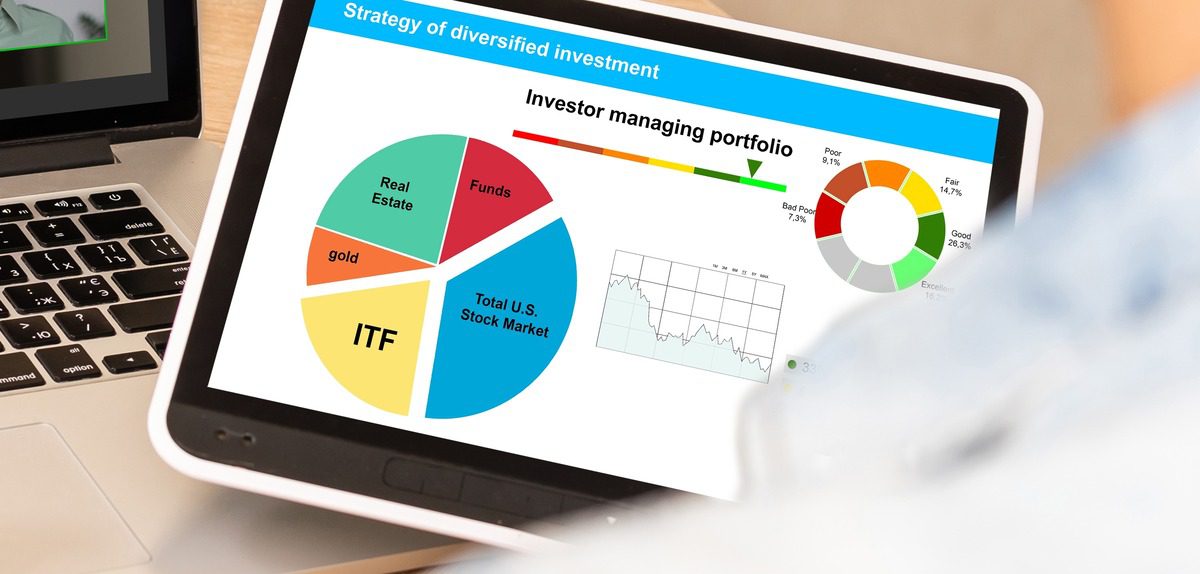
If you want a balanced perspective on how technical analysis fits into investing, Investopedia’s technical analysis overview is a solid starting point.
The Bottom Line
A gold number in investing usually refers to the golden ratio (about 1.618) and its related Fibonacci levels, especially 61.8%. Traders use these ratios to frame potential support, resistance, and price targets, but results are not guaranteed and the process is subjective.
If you use golden-ratio tools, treat them as one input, keep risk controls in place, and anchor your overall plan in diversification, time horizon, and costs.
