

Fool’s gold is pyrite, a shiny mineral that can look like gold at a glance, but it has little to do with real gold in value or behavior. This matters because the mix-up can cost you money if you’re buying, selling, or collecting anything advertised as “gold” without proper verification.
Below is what fool’s gold is made of, why it gets mistaken for the real thing, and the simple tests that can help you tell pyrite from real gold in 2026 and beyond.
Key Takeaways
- What it is: Fool’s gold is usually pyrite, an iron sulfide mineral with the formula FeS2.
- Why it fools people: Pyrite can look brassy-yellow and shiny, and it can occur in similar places as gold, including quartz veins.
- Fast tell: Pyrite often forms crisp, flat-faced crystals, while gold is typically irregular, rounded, or nugget-like.
- Simple tests help: Pyrite leaves a dark streak and is much harder than gold, while gold is softer and leaves a yellow streak.
- Investment lesson: Don’t rely on looks when money is involved, verify precious metals with reputable testing methods or professionals.
What is fool’s gold, and what is it made of?
Fool’s gold is a colloquial term for pyrite, also called iron pyrite. Pyrite is an iron disulfide mineral with the chemical formula FeS2, and it’s widely described as the most common sulfide mineral.
Its bright metallic luster and brassy color are what cause the mix-up. The U.S. Geological Survey notes that pyrite is commonly called fool’s gold, and it often appears in environments that can also host real gold, which adds to the confusion.
For a straightforward explanation, see the USGS overview of what fool’s gold is.
Why is it called “fool’s gold”?
It’s called “fool’s gold” because people, especially during gold rushes, mistook shiny pyrite for valuable gold. The trade-off is that pyrite can look impressive in the hand while being intrinsically far less valuable than real gold.
Even the name “pyrite” reflects its history. It comes from a Greek word associated with striking fire, since pyrite can create sparks when struck against metal or stone.
How can you spot pyrite vs. real gold just by looking?
You can often spot pyrite by its sharp crystal shapes and brassy shine, while natural gold usually looks more irregular and “soft” in form. Looks aren’t definitive, but they’re a good first filter.
- Color and shine: Pyrite often has a brassy, slightly greenish-yellow tone. Gold tends to look more warmly yellow and uniform.
- Crystal shape: Pyrite commonly forms distinct crystals with flat faces and sharp edges, often cubic-looking. Gold rarely forms crisp geometric crystals in everyday finds and is more often seen as flakes, wires, or irregular nuggets.
- Surface texture: Pyrite can look glittery or “sequined” in clusters. Gold usually looks smoother and more buttery, even when rough.
- Where it shows up: Pyrite is often found in quartz veins, which is also where some gold occurs, so location alone doesn’t confirm anything.
The University of Minnesota’s mineral guide highlights pyrite’s characteristic flat crystal faces, unlike gold. The USGS mentions this common association with quartz veins in its fool’s gold FAQ.
If you’re considering paying “gold prices,” don’t stop at visual checks. In practice, pyrite can be convincing in the right lighting.
What is the streak test, and how does it identify pyrite?
A streak test identifies pyrite because pyrite leaves a dark streak, while real gold leaves a yellow streak. It checks the color a mineral leaves when rubbed on an unglazed porcelain tile, called a streak plate.
- Pyrite streak: black to brown
- Gold streak: yellow
Pyrite’s dark streak is a classic giveaway. The Minerals Education Coalition notes pyrite produces a black or brown streak and is commonly called fool’s gold.
You can review pyrite’s key properties in the Minerals Education Coalition database. Practical tip: Streak testing can scratch or powder a sample.
If the item is jewelry or a collectible you don’t want to damage, skip DIY testing and use a professional method instead.
How do hardness and density separate pyrite from real gold?
Hardness and density separate pyrite from real gold because pyrite is much harder, and gold is much heavier for its size. What actually matters here is that these are physical properties you can’t “fake” with lighting or a pretty photo.
Hardness (scratch resistance)
- Pyrite: Mohs hardness about 6 to 6.5
- Gold: much softer, gold can be scratched relatively easily
Because pyrite is much harder than gold, it resists scratching by many common materials that would mark gold. The Minerals Education Coalition lists pyrite’s Mohs hardness (6-6.5) in its pyrite profile.
Density (heft)
- Gold: extremely dense and heavy for its size
- Pyrite: notably lighter than gold for the same apparent size
“Heft” can help when you can compare two similar-sized pieces, but it’s not a standalone test. The mistake most people make is relying on weight without considering that many non-gold metals can also feel heavy.
Where is pyrite found, and can it contain real gold?
Pyrite is common and widespread, and it’s often found in quartz veins. That’s also a setting that can host gold, which is one reason the two get confused in the field.
Sometimes gold can occur in the same geologic systems as pyrite, and in some deposits gold can be associated with sulfide minerals. But you can’t assume a pyrite specimen has meaningful gold content just because it’s in a gold-looking vein.
If you suspect gold-bearing ore, that becomes a lab question, not a visual one.
Is fool’s gold worth anything in 2026?
Pyrite can be worth something to collectors and for industrial uses, but it isn’t valuable like gold. Collectors buy pyrite specimens for their crystal shapes and metallic luster, and pyrite has had industrial importance.
The USGS notes pyrite is an important source of sulfur dioxide used in various industrial applications, which is part of why it matters beyond being a lookalike. That same USGS resource is a good starting point for understanding its role.
For personal finance purposes, the key point is simple: pyrite does not track gold prices. It should not be treated as a gold investment.
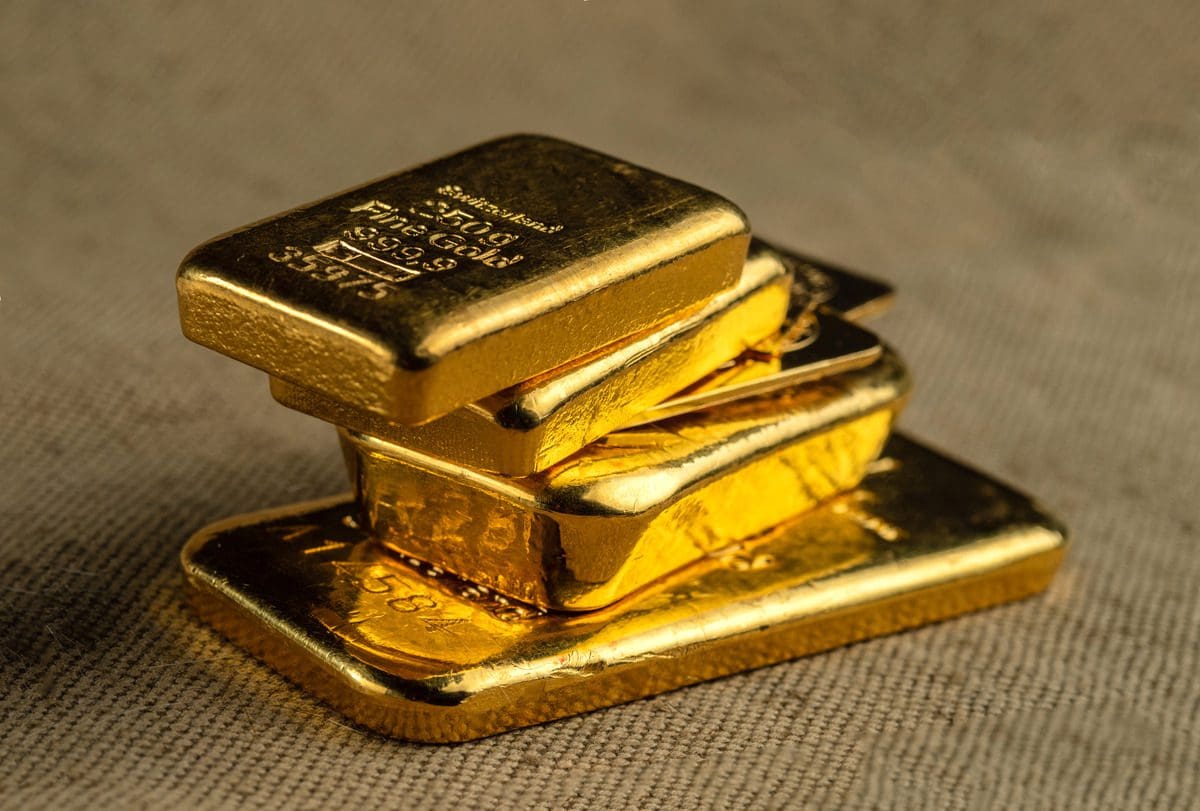
How do you avoid gold scams tied to misidentified metals?
You avoid pyrite-related gold scams by insisting on verification, not visuals, and by using reputable sellers for high-value purchases. When money is involved, “looks like gold” isn’t a standard.
Common problems include mislabeled nuggets, fake “gold ore,” and online listings using vague terms like “natural gold specimen.” These listings often lack verifiable testing.
To reduce the risk:
- Ask what verification was done: Reputable sellers can explain their testing method and provide documentation when appropriate.
- Use professional testing for high-value purchases: Jewelers and bullion dealers can test metal content using non-destructive tools, often XRF analyzers.
- Be cautious with marketplace deals: If a price seems too good relative to the stated weight and purity, treat that as a risk signal.
| Dealer | Minimum Investment | Storage Fee | Learn More |
|---|---|---|---|
| American Hartford Gold | $5,000 / $10,000
$5,000 for cash purchases / $10,000 for gold IRA |
$200 - $280 | Read Review |
| Goldco | $15,000 / $25,000
$15,000 for cash purchases / $25,000 for gold IRA |
$100 - $150
Non-Segregated: $100 | Segregated: $150 per year . Estimated annual fee. |
Read Review |
| APMEX | – | About 0.55%
Annually, estimated - can be vary between accounts |
Read Review |

For a deeper explainer on what pyrite is, see the overview on pyrite’s composition and “fool’s gold” reputation. For background on the term’s gold rush roots, this summary of how fool’s gold got its name adds useful context.
The Bottom Line
Fool’s gold is pyrite, an iron disulfide (FeS2) that can look a lot like real gold but behaves very differently. It fails simple tests like streak and hardness compared to the genuine precious metal.
If you’re buying or selling anything represented as gold, don’t rely on appearance alone. Use basic identification methods for rocks and specimens, and use professional purity testing when real money is on the line.
Read More
