


Table Of Content
Adding gold and silver to your portfolio can offer diversification, inflation protection, and a store of value during uncertain times.
Whether you're a conservative investor seeking stability or simply want to hedge against market downturns, there are several practical ways to invest in precious metals.
The Different Ways to Invest in Gold and Silver
Gold and silver offer diverse investment options, from physical bullion to ETFs and mining stocks. Each method has unique benefits, risks, and strategies suited to different investor goals and preferences.
Investment Method | Description | Best For |
|---|---|---|
Physical Metals (Coins, Bars) | Direct ownership of gold or silver in tangible form | Long-term holders, inflation hedging |
ETFs and Mutual Funds | Track metal prices or invest in mining stocks | Passive investors, easy trading |
Mining Stocks | Shares in companies that mine gold or silver | Growth-focused investors |
Royalty Companies | Companies that finance miners in exchange for future revenue | Lower-risk exposure to mining sector |
Precious Metals IRAs | Tax-advantaged accounts holding physical metals | Retirement-focused investors |
1. Buy Physical Gold and Silver
Purchasing physical gold and silver means owning tangible assets you can store and control outside the traditional financial system. This approach is popular among long-term investors seeking security, inflation protection, and direct ownership.
Physical metals typically come in three main forms:
Coins – Government-minted coins like the American Gold Eagle or Canadian Silver Maple Leaf are widely trusted and easy to resell, though they carry higher premiums.
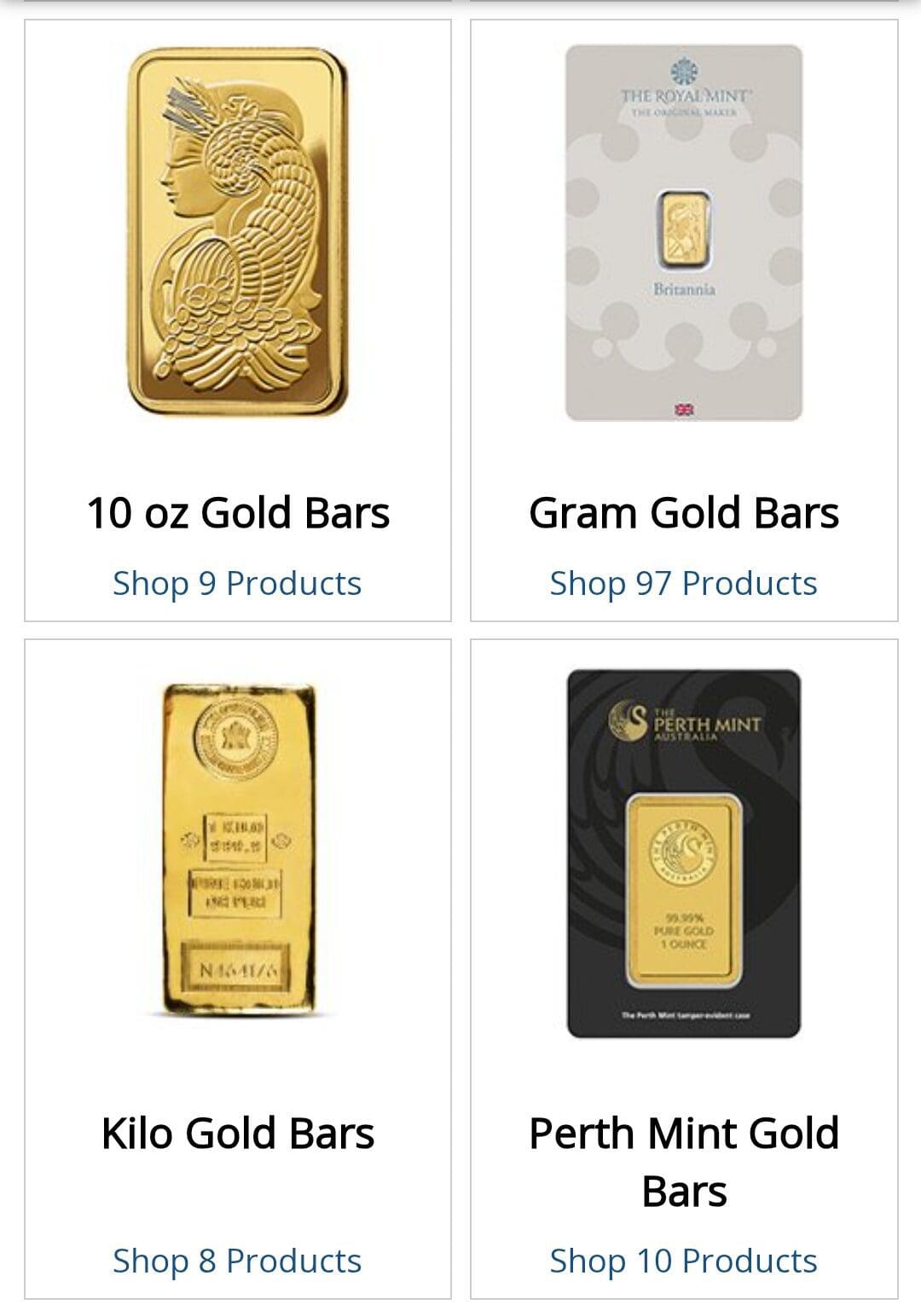
Bars – Available in multiple sizes, gold and silver bars offer lower premiums per ounce, making them ideal for larger investments.
Rounds – Privately minted and typically more affordable, rounds are great for stacking but aren’t legal tender.
-
Where to Buy Physical Gold and Silver
Once you’ve decided on the type of gold or silver to add to your portfolio, selecting a reputable dealer is essential. A few best practices:
Check Dealer Credentials: Look for accreditation from organizations like the Better Business Bureau (BBB), the Professional Numismatists Guild (PNG), or the American Numismatic Association (ANA).
Review Customer Feedback: Platforms like Trustpilot and BBB can offer insights into shipping times, service quality, and overall trustworthiness.
Compare Prices: Make sure the dealer clearly shows the spot price, premiums, and any shipping or storage fees. Avoid prices that seem suspiciously low—they could signal a scam.
- Online vs Local: understand their differences and choose which of them works for you.
Proper research reduces risk and helps ensure your purchase is secure, authentic, and fairly priced.
Broker | Best For |
|---|---|
JM Bullion | First-Time Buyers, Simple Buying Process |
APMEX | Collectible Coins, High-Volume Buyers |
SD Bullion | Lowest Price Guarantees |
Money Metal Exchange | Monthly Savings Plans, IRA Rollovers |
Silver Gold Bull | Discreet Shipping, International Buyers |
Bullion Vault | Low-Cost Storage, Global Gold Trading |
-
Pros, Cons & Storage Challenges
One of the biggest considerations when buying physical gold or silver is where and how to store it safely. Improper storage can lead to theft, damage, or even difficulty accessing your investment when needed. Here are your main options:
Home Storage: Store metals in a heavy, fireproof safe that’s securely bolted down. Discretion is key, and you may need to add an insurance rider to your homeowner’s policy for protection.
Bank Safe Deposit Box: A safe deposit box offers low-cost, secure storage, but access is limited to banking hours and contents are typically not insured by the bank.
Professional Vaulting Services: Vaulting services provide fully insured, high-security storage with options for allocated or segregated holdings—ideal for large investments or long-term storage needs.
Pros | Cons |
|---|---|
Full control and direct ownership | Requires secure storage and insurance |
No counterparty risk | Less liquid than ETFs or stocks |
Hedge against inflation and currency | Premiums and shipping costs can add up |
Useful in emergency or economic crisis | Vulnerable to theft if not properly secured |
2. Buy Gold and Silver Through ETFs and Mutual Funds
If you want exposure to gold or silver without the hassle of storing physical metals, ETFs (exchange-traded funds) and mutual funds can be a smart addition to your portfolio.
These financial instruments track the price of metals or invest in related mining companies, offering a more convenient and liquid way to invest.
-
How to Buy Gold and Silver ETFs or Mutual Funds
Here's the process:
Choose Your Exposure Type: Decide between physically backed ETFs or funds that invest in mining stocks.
Open or Use a Brokerage Account: Use a brokerage platform such as Fidelity, Charles Schwab, or Vanguard to buy shares just like any stock or ETF.
Understand the Fees: ETFs generally charge annual expense ratios between 0.2%–0.6%, while mutual funds can be higher. Always check management fees and fund performance before investing.
This method is especially appealing for investors looking for portfolio diversification, tax efficiency, and ease of access through traditional investment accounts.
-
Popular Gold and Silver ETFs
ETFs offer a simple way to gain exposure to gold and silver prices or mining companies through your brokerage account. Here are some of the most widely used and trusted options:
ETF Name | Ticker | Focus |
|---|---|---|
SPDR Gold Shares | GLD | Physical gold |
iShares Silver Trust | SLV | Physical silver |
VanEck Gold Miners ETF | GDX | Gold mining companies |
VanEck Junior Gold Miners ETF | GDXJ | Small/mid-cap gold mining companies |
Aberdeen Standard Physical Silver Shares ETF | SIVR | Physical silver |
iShares MSCI Global Gold Miners ETF | RING | Global gold mining stocks |
-
Pros and Cons of Buying Gold and Silver via Funds
Buying gold and silver through ETFs and mutual funds offers easy access, high liquidity, and low fees, making it convenient for most investors.
However, you don’t own the physical metals, and your investment is subject to stock market volatility and fund management risks.
Here's a summary:
Company Name | Type | Key Focus |
|---|---|---|
Barrick Gold Corp | Mining Stock | One of the world’s largest gold producers |
Newmont Corporation | Mining Stock | Major U.S.-based miner with global operations |
Franco-Nevada Corporation | Royalty Company | Diversified royalty agreements across projects |
Wheaton Precious Metals | Royalty Company | Focuses on silver and gold streaming contracts |
Agnico Eagle Mines | Mining Stock | Strong production profile and dividend history |
3. Buy Mining Stocks and Royalty Companies
Another way to gain exposure to gold and silver in your portfolio is by investing in mining stocks and royalty companies.
Mining Stocks – These are companies involved in discovering, extracting, and refining precious metals. When gold or silver prices go up, their profit margins can expand significantly.
Royalty Companies – These firms provide capital to miners in exchange for a percentage of future production or revenue, often with less operational risk and more consistent cash flow.
While you don’t own the metals directly, these companies are closely tied to gold and silver prices—often offering greater upside when prices rise.
-
How to Buy Mining and Royalty Stocks
Like buying any other stock, the process is simple if you have a brokerage account:
Choose the Right Companies: Research well-established names like Barrick Gold and Newmont for mining exposure, or Franco-Nevada and Wheaton Precious Metals for royalty investments.
Use a Brokerage Account: You can purchase shares of these companies just like any stock through online platforms such as Fidelity, E*TRADE, or Schwab.
Review Financials and Risks: Analyze production costs, geopolitical exposure, balance sheets, and resource reserves. Profitability depends heavily on operational efficiency and metal price trends.
-
Popular Gold and Silver Mining & Royalty Stocks
Top picks include Barrick Gold and Newmont for mining exposure, and Franco-Nevada and Wheaton Precious Metals for royalty streams.
These companies offer strong ties to metal prices, global operations, and varying risk-reward profiles, making them popular for investors seeking leveraged exposure to gold and silver markets.
Pros | Cons |
|---|---|
Potential for higher returns than physical metals | Exposed to stock market and operational business risks |
Easy to buy and sell through any brokerage account | Company performance can lag even if metal prices rise |
Royalty firms offer more diversified, lower-risk income | Still tied to gold/silver price swings and market volatility |
No need for storage or physical handling | Requires equity research and understanding of mining sector |
-
Pros and Cons of Buying Mining and Royalty Stocks
Mining and royalty stocks can outperform metals during bull markets and offer potential dividends.
However, they carry business, geopolitical, and operational risks, and are subject to broader stock market volatility.
Royalty firms tend to be more stable, while mining companies offer higher upside—and downside—depending on production and market trends.
Pros | Cons |
|---|---|
Long-term tax advantages (tax-deferred or tax-free growth) | More complex setup process than standard brokerage investments |
Direct ownership of physical gold or silver | Must store metals in approved depository—no home storage allowed |
Protection against inflation and market volatility | Custodial, administrative, and storage fees can add up over time |
Diversifies retirement portfolio with tangible assets | Limited liquidity—early withdrawals may trigger taxes and penalties |
4. Buy Gold and Silver Through a Precious Metals IRA
A Precious Metals IRA is a strategic option for long-term investors looking to hold gold and silver in a tax-advantaged retirement account.
This approach allows you to own physical metals—such as gold or silver coins and bars—within a self-directed IRA, combining the stability of precious metals with the retirement benefits of traditional or Roth IRAs.
Unlike ETFs, this gives you direct ownership of metals, though they must be stored in an IRS-approved depository—not at home.

-
How Set Up Gold IRA?
Setting up a Precious Metals IRA lets you hold physical gold or silver in a tax-advantaged retirement account. Here's how:
Open a Self-Directed IRA: There are many great options for opening a precious metals IRA – compare them carefully and pick the right one for your needs.
Fund Your Account: You can fund it through direct contributions, a rollover from a 401(k), or a transfer from another IRA.
Choose IRA-Approved Metals: Select qualifying gold or silver, such as American Gold Eagles or 99.9%+ pure bullion bars and coins that meet IRS standards.
Select a Storage Facility: Metals must be stored in approved, secure depositories like the Delaware Depository or Brinks Global Services.
-
Popular Gold and Silver IRA Providers
Several trusted companies specialize in setting up Precious Metals IRAs, including:
Broker | Minimum Investment | Storage Fees |
|---|---|---|
Goldco | $15,000 / $25,000
$15,000 for cash purchases / $25,000 for gold IRA | $100 – $150
Non-Segregated: $100 | Segregated: $150 per year . Estimated annual fee. |
American Hartford Gold | $5,000 / $10,000
$5,000 for cash purchases / $10,000 for gold IRA | $200 – $280 |
Patriot Gold Group | $10,000 / $50,000
$10,000 for cash purchases / $50,000 for gold IRA | $200
$200 ( $250 first year). Also, there is an annual maintenance fee of $250. Estimated annual fee. |
Birch Gold Group | $10,000
| $100
$100 for annual storage fee, but there is additional $125 for account maintenance . Estimated annual fee. |
Noble Gold | $2,000 / $20,000
$2,000 for cash purchases / $20,000 for gold IRA
| $150
Estimated annual fee for storage |
Lear Capital | $5,000 / $10,000
$50,000 for cash purchases / $10,000 for gold IRA | $200
Also, there is an annual maintenance fee of $200. Estimated annual fee. |
Advantage Gold | $5,000
$5,000 for gold IRA | $175
Estimated annual fee for storage |
These companies typically handle paperwork, help choose IRS-compliant metals, and coordinate with insured depositories for storage.
-
Pros and Cons of Buying Gold and Silver Through an IRA
Precious Metals IRAs offer tax benefits, portfolio diversification, and physical asset ownership for retirement planning.
However, they require approved custodians, secure depositories, and come with additional fees. If it's not for you, there are great alternatives.
Summary
Buying gold and silver offers a range of options depending on your goals, risk tolerance, and investment style.
You can own physical metals like coins and bars for long-term security, or choose ETFs and mutual funds for easy access and liquidity.
Mining stocks and royalty companies provide leveraged exposure to metal prices, while Precious Metals IRAs combine tax advantages with physical ownership.
FAQ
Both have their advantages—gold is more stable and less volatile, while silver is more affordable and can offer higher percentage gains. The better option depends on your goals and risk tolerance.
Yes, in small quantities from local dealers, you can often purchase metals without ID. However, online or large transactions typically require verification for regulatory purposes.
Junk silver coins are older U.S. coins (pre-1965) with 90% silver content. They're popular for smaller investments and barter potential, though they carry premiums over spot.
Yes, profits from selling precious metals are typically subject to capital gains tax. Rates and rules vary by country and may depend on how long you've held the asset.
Traditional 401(k) plans usually don’t allow physical metals. However, you can roll over your funds into a self-directed IRA that supports gold and silver.
Physical gold and silver do not generate income. If you want income exposure, consider mining stocks or royalty companies, which may pay dividends.
The gold-to-silver ratio shows how many ounces of silver equal one ounce of gold. Investors use it to identify potential buying opportunities between the two metals.
Use trusted dealers and look for hallmarks, weight, and dimensions. For extra security, some investors use third-party appraisers or XRF scanners.
Allocated storage gives you specific bars or coins held in your name, while unallocated means you're owed a certain amount but not tied to a particular piece. Allocated storage is safer but usually costs more.
Precious metals often perform well in downturns as investors seek safe havens. However, timing the market is risky, so it’s better to build a position gradually.
It can be if you're using an unverified seller. Stick with reputable online dealers that are accredited and have strong customer reviews.
