

In its newly released 2026 Innovation Horizons Report, HSBC Innovation Banking identifies three seismic shifts reshaping the economy: accelerating AI momentum, the concentration of venture capital into “mega-rounds,” and an intensifying global race for compute power. While the report targets high-net-worth audiences, its findings offer critical signals for anyone following the technology sector.
Why it matters: These trends dictate where capital flows, which technologies will scale, and how competitive moats are built. For self-directed investors, looking beyond the hype to understand the infrastructure behind AI—and the funding dynamics driving the winners—can significantly improve decision-making and risk management across both public equities and private-market exposures.
Key Takeaways
- Momentum: HSBC sees AI moving rapidly from concept to production, requiring massive investment in digital infrastructure.
- Concentration: Venture funding is increasingly gathering around established leaders in large “mega-rounds” rather than being spread thinly across early-stage startups.
- Infrastructure: Strategic advantage is shifting toward those who control the “compute stack”—chips, data centers, and power.
- Strategy: Retail investors should look beyond headline AI apps to the underlying hardware and adhere to strict diversification discipline.
What did HSBC release and why does it matter?
HSBC Innovation Banking’s report outlines how Generative AI (GenAI) and Large Language Models (LLMs) are reorganizing the innovation economy. Simply put, the bank anticipates a shift where AI moves into full production, venture capital consolidates into fewer, larger deals, and nations sprint to secure computing capabilities.
The central message is that capital is coalescing around AI leadership and cross-border compute capacity. This dynamic is shaping company formation and capital allocation across the U.S., Europe, and Asia. For investors, this suggests the market is moving from an experimental phase to an infrastructure-heavy buildout phase. Full details are available in the HSBC press release.
Where is AI momentum heading by 2026?
AI is scaling from experimental pilots to core production systems. By 2026, automation is expected to touch more workflows and industries, driving corporate budgets toward compute resources, data pipelines, and model deployment. The demand signal now extends well beyond popular tools like consumer chatbots into enterprise software, security, and industrial automation.

For investors, this transition implies growth in “inference” (running the models) and edge AI (running AI on local devices), alongside tools that improve developer productivity. As companies operationalize AI, the market focus will likely shift toward throughput, speed (latency), and total cost of ownership.
What could slow AI adoption in the near term?
While the trajectory is powerful, adoption will not be linear. Market analysis from The Asset highlights three potential headwinds: soaring development costs, the immense energy requirements for training models, and growing investor skepticism regarding immediate returns.
Despite these hurdles, the long-term economic impact remains significant. The analysis cites research suggesting large productivity gains over time, including a PwC estimate that AI could add nearly $16 trillion to global GDP by 2030. However, friction remains in the form of regulatory compliance, data privacy concerns, and the pressure on companies to prove the unit economics and payback periods of their AI investments.
What is the global AI “Compute Race”?
The “compute race” refers to the global scramble to build and control the physical stack that makes AI possible. This ecosystem includes advanced semiconductors, high-bandwidth networking, memory, power systems, and the data centers that house them.
Understanding this infrastructure is key. Even groundbreaking ventures like Neuralink, which focus on brain-computer interfaces, rely heavily on this advanced technological backbone.
As HSBC notes, competitive advantage is accruing to entities with scalable AI capabilities and dependable, cross-border digital infrastructure. Governments and enterprises now view compute capacity as a strategic asset, focusing investment on supply chain resilience, export controls, and energy availability.
How will power and data center capacity shape winners?
Because AI workloads are voracious consumers of power, energy infrastructure has become a critical chokepoint. Success in this sector depends on data center design, grid access, and thermal management. Regions that can offer reliable power and clear permitting paths are likely to attract outsized investment.
For companies, access to affordable energy can determine the economic viability of their AI products. Investors should watch for developments in energy procurement (such as nuclear or renewable contracts), grid interconnection timelines, and cooling innovations like liquid cooling, which are increasingly material to cost predictability.
What do venture “Mega-Rounds” mean for retail investors?
HSBC reports a concentration of capital into “mega-rounds,” where vast sums are poured into a small number of late-stage companies. This signals several shifts:
- Winner-Takes-Most: Scale-up capital is favoring perceived category leaders, making it harder for challengers to catch up.
- Valuation Clustering: Late-stage private valuations may remain high, while the breadth of early-stage funding narrows.
- Public Pipeline: The eventual pipeline of IPOs could be dominated by firms with heavy infrastructure or platform advantages.
For retail investors, the takeaway is caution: do not chase private-market headlines. Instead, track where funding saturation suggests durable moats, and conversely, where capital scarcity might open gaps for new entrants.
How can you evaluate companies riding the AI wave?
When you need to evaluate companies in this volatile sector, look for fundamental strength rather than hype.
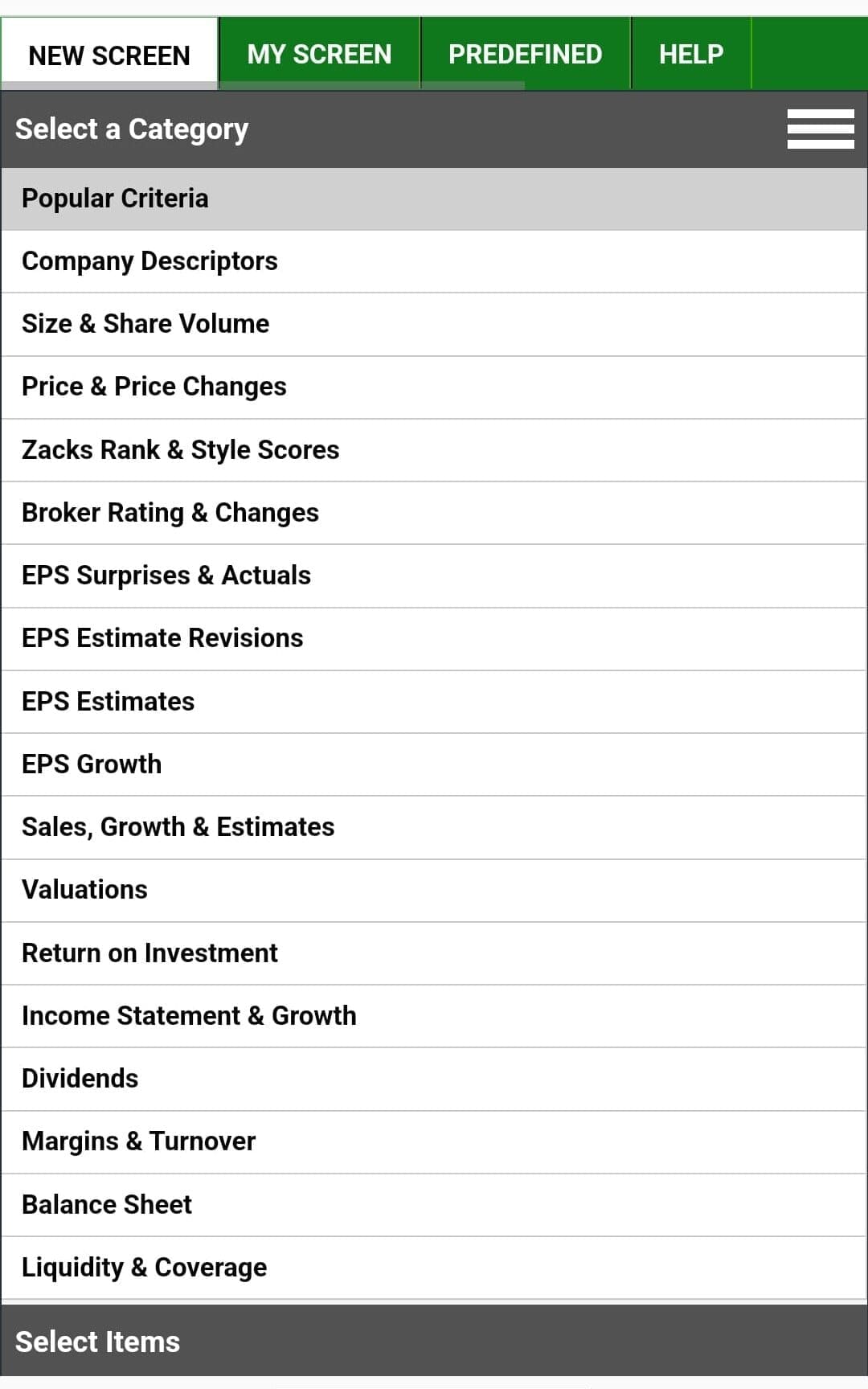
Consider these practical filters:
- Monetization: Is there a clear path from AI capability to revenue? Are customers actually paying for it?
- Compute Efficiency: Does the company have access to cost-effective compute power?
- Data Governance: Are data rights and security managed responsibly to avoid regulatory fines?
- Infrastructure Alignment: Is the business model tied to durable infrastructure needs rather than experimental apps?
- Capital Discipline: Can the company balance growth with the high costs of running AI models?
Which sectors offer indirect exposure?
Investors do not need to pick a single winning AI model to benefit from the build-out. The broader ecosystem offers “pick and shovel” opportunities:
- Semiconductors: Chipmakers and specialized accelerator designers.
- Networking: Providers of high-speed data transfer equipment.
- Utilities: Power infrastructure, grid technology, and sustainable energy providers.
- Real Estate: Data center operators and thermal solution suppliers.
- Cybersecurity: Software that secures data pipelines and manages privacy.
Are there regulatory and ESG risks?
Yes. As the sector matures, non-financial risks are rising:
- Data Sovereignty: Compliance with local laws regarding where data is stored can impact costs.
- Trade Restrictions: Export controls on chips influence supply chain stability.
- Environmental Impact: The carbon footprint of data centers is under scrutiny, making energy efficiency a key metric for long-term viability.
How to manage risk in fast-moving tech themes
- Diversify by Layer: Blend exposure across applications (software), platforms (cloud), and infrastructure (chips/energy) to reduce single-point failure risk.
- Stagger Entry: Use dollar-cost averaging to smooth out volatility in high-beta stocks.
- Size Positions: Keep high-volatility themes as a measured portion of your total portfolio.
- Demand Evidence: Favor companies that show customer traction and operational discipline over those selling pure potential.
Conclusion: The Bottom Line
HSBC’s 2026 outlook sketches a future where the innovation economy is defined by concentrated capital and a global arms race for computing power. While the opportunity is immense, it is constrained by real-world limits on energy, cost, and regulation. Retail investors can participate most effectively by focusing on the “picks and shovels” of the infrastructure stack, demanding clear monetization strategies, and maintaining disciplined portfolio construction. In a market defined by speed, patience remains a competitive edge.